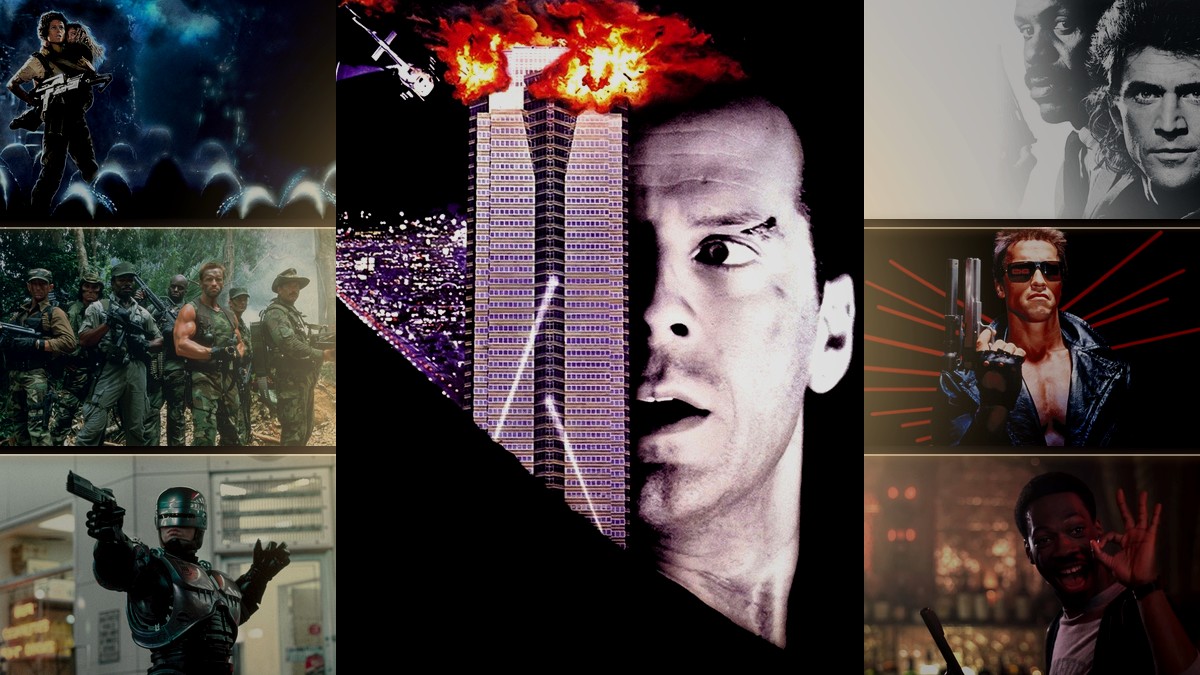

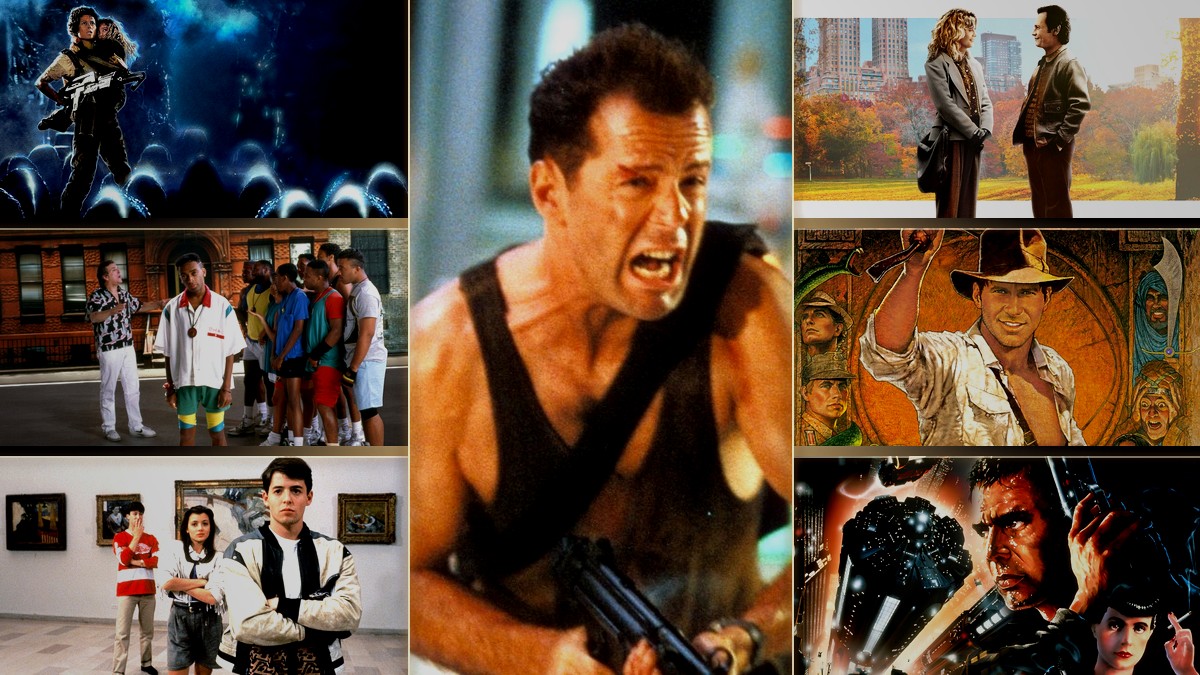
The 1980s produced more lasting movies in ten years than most decades produce in twenty. The blockbuster as we know it was being invented. Spielberg and Lucas were at full tilt. John Hughes was reinventing the teen movie. James Cameron was figuring out what an action sequence could look like. Spike Lee was about to change American film entirely.
The catch, in 2026, is that the great 80s movies are scattered across half a dozen streamers, and most "best of" lists run 30+ entries that feel like a Wikipedia dump. Here are ten that earn the word "essential," with where each one currently lives. Refresh your queue accordingly.
At a Glance
- Raiders of the Lost Ark (1981) — Disney+
- Blade Runner (1982) — Netflix (Final Cut)
- The Princess Bride (1987) — Disney+
- Aliens (1986) — Max
- The Breakfast Club (1985) — Peacock
- Do the Right Thing (1989) — Peacock
- Ferris Bueller's Day Off (1986) — Paramount+
- Beetlejuice (1988) — Max
- When Harry Met Sally (1989) — Max
- Die Hard (1988) — rent ($3.99)
01
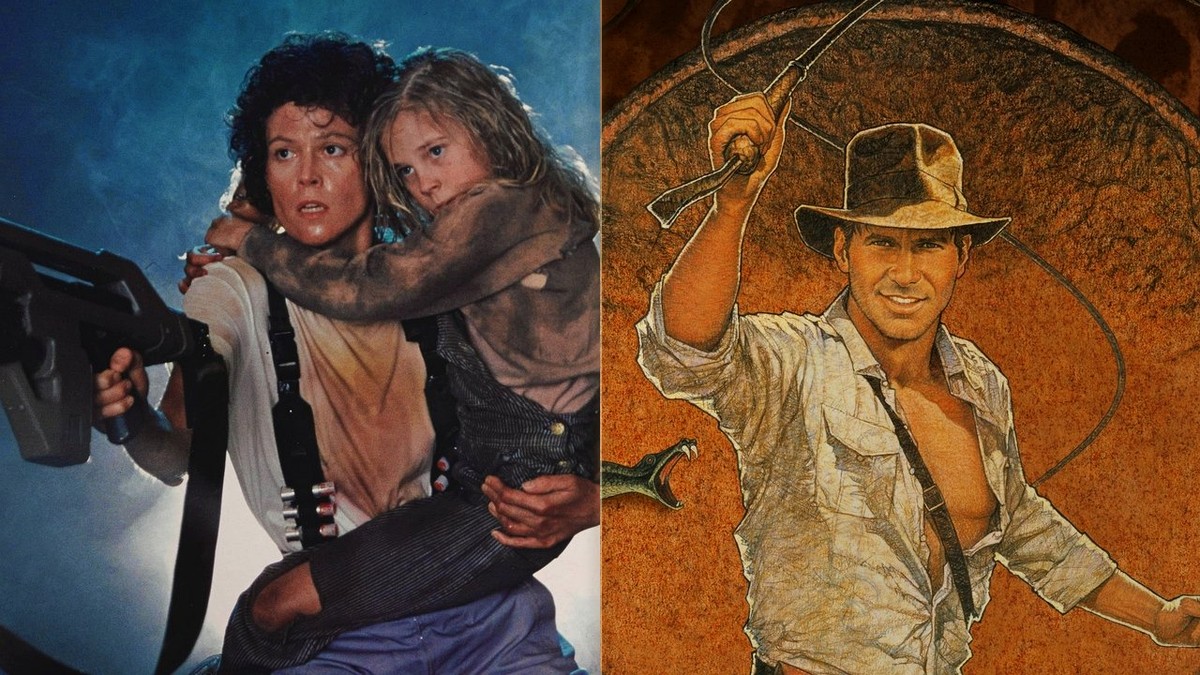
Raiders of the Lost Ark (1981)
Steven Spielberg directs, George Lucas produces, Harrison Ford stars, John Williams scores. Raiders is the platonic ideal of the adventure movie — the opening boulder sequence alone has been imitated, parodied, and homaged in roughly half the action films of the last forty years.
What makes it hold up in 2026 is the specificity. Indy isn't a generic action hero. He's a professor who's pretty good at running but actually quite bad at fighting. The action setpieces have geographic logic. The Nazis are villains because the film cares that they're Nazis. Compare this with most modern blockbuster filmmaking, which has stopped caring about most of those things, and Raiders feels almost radical.
Watch on Disney+.
02
Blade Runner (1982)
Ridley Scott's adaptation of Philip K. Dick's Do Androids Dream of Electric Sheep? The film bombed in theaters — it got buried by E.T., which opened the same summer — and has become one of the most influential films ever made. Every cyberpunk anything (The Matrix, Ghost in the Shell, the visual language of Cowboy Bebop, half of contemporary video games) is in some way Blade Runner's child.
The Final Cut, released in 2007 with Scott's full involvement, is the version to watch. Rutger Hauer's "tears in rain" monologue is improvised and is among the most quoted moments in any 80s movie. Vangelis's score is its own argument for why electronic music belongs in cinema.
Watch on Netflix (Final Cut). Other cuts are rentable on Amazon and Apple TV.
03
The Princess Bride (1987)
Rob Reiner's fairy-tale adventure, adapted by William Goldman from his own novel. The structural conceit — a grandfather (Peter Falk) reading the story to his sick grandson (Fred Savage) — is what lets the film shift between romance, swordplay, comedy, and genuine tragedy without ever feeling tonally confused.
Cary Elwes, Robin Wright, Mandy Patinkin (his Inigo Montoya is one of the most beloved performances in any 80s movie), André the Giant, Wallace Shawn, Christopher Guest. The casting is impossible. The film is both more sincere and more cynical than most fantasy films know how to be at the same time.
It's the rare movie that holds up perfectly across three generations of viewers. Your kid will love it. Your parent will love it. You will love it. We can't say that about a lot of 80s films.
Watch on Disney+.
04
Aliens (1986)
James Cameron's sequel to Ridley Scott's Alien, and one of the most successful tonal shifts in the history of franchise filmmaking. Scott made a horror movie. Cameron made an action movie. Both films are perfect.
Sigourney Weaver's Ripley is a more developed character here than in the original — a survivor with PTSD asked to go back into the situation that nearly killed her. The supporting cast (Bill Paxton, Lance Henriksen, Michael Biehn, Jenette Goldstein, the Marines) is constructed with more care than most modern ensemble films can manage. The third act is one of the most precisely-timed action sequences in any 80s film.
Watch on Max.
05
The Breakfast Club (1985)
John Hughes's high-water mark. Five high school students in detention on a Saturday — a brain (Anthony Michael Hall), an athlete (Emilio Estevez), a basket case (Ally Sheedy), a princess (Molly Ringwald), and a criminal (Judd Nelson) — talk for ninety minutes and let the masks slip.
The film has aged unevenly. The makeover scene at the end is the kind of choice modern audiences have stopped giving a pass to. Bender's behavior toward Claire is also rough by 2026 standards. Both critiques are fair. Both are also outweighed by what the movie still gets right — the patience to let teenagers actually talk, the writing that takes their inner lives seriously, the structural commitment to the unities of time and place.
Hughes wrote the script in two days. It still influences every "trapped together for 90 minutes" character study made since.
Watch on Peacock.
06
Do the Right Thing (1989)
Spike Lee's masterpiece, set on the hottest day of the year in Bedford-Stuyvesant. The film follows Mookie (Lee) over a single day at Sal's Famous Pizzeria as racial tensions in the neighborhood build toward the climax everyone watching can feel coming.
This is the most important American film of the 1980s. It refused to give viewers an easy moral resolution, refused to soften its argument, refused to let any single character carry the weight of the film's politics. Critics at the time famously panicked — Joe Klein wrote in New York Magazine that the film might cause riots. It didn't. It became the canonical American film about race in the 80s and has only become more relevant since.
Watch on Peacock or rent on Amazon.
07
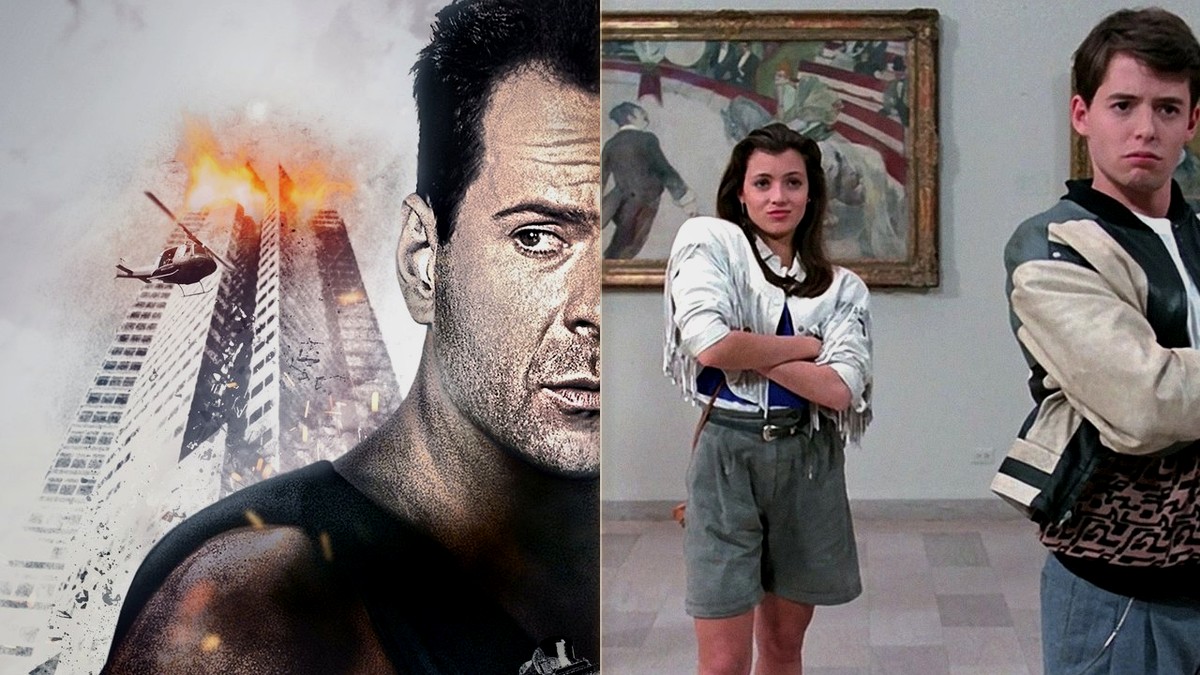
Ferris Bueller's Day off (1986)
The other John Hughes movie that earns its spot here. Matthew Broderick as Ferris, the high school student who skips class with his best friend (Alan Ruck) and his girlfriend (Mia Sara) for one perfect Chicago day. Jeffrey Jones as the principal who's trying to catch them. Jennifer Grey as Ferris's furious sister.
The film is structurally weirder than its reputation. Ferris breaks the fourth wall constantly. The plot is barely a plot — it's a hangout movie disguised as a comedy. Cameron, the depressive friend in the perfect father's perfect Ferrari, is the film's actual emotional center, and Alan Ruck is doing some of the best supporting work of any 80s comedy.
Watch on Paramount+.
08
Beetlejuice (1988)
Tim Burton's breakout, and probably the most distilled version of Burton's actual style before he started doing larger-budget work. Michael Keaton as Beetlejuice (on screen for less than 18 minutes total, somehow the most memorable performance in the film). Geena Davis and Alec Baldwin as the dead married couple. Catherine O'Hara, Jeffrey Jones, and a teenage Winona Ryder as the new family that moves into the haunted house.
Burton's visual language was already fully formed. The stop-motion sequences, the bureaucratic afterlife, the prosthetics. Almost nothing else in 80s cinema looks like this film. The tone — comedy that's also genuinely macabre — is the template Burton has been refining for almost forty years.
Watch on Max.
09
When Harry Met Sally (1989)
Rob Reiner directs (his second appearance on this list), Nora Ephron writes. Billy Crystal and Meg Ryan as two acquaintances in New York whose friendship slowly, over twelve years, becomes something else. The diner scene is the most famous individual scene in any 80s rom-com. The film around it is even better than the scene.
Ephron's writing is the load-bearing element. The script understands that romantic comedies live or die on dialogue, and the dialogue is sharp enough that decades of imitators have failed to reproduce it. The structure — twelve years compressed into ninety minutes — is more ambitious than most modern rom-coms attempt.
Watch on Max.
10
Die Hard (1988)
John McTiernan directs. Bruce Willis is John McClane. Alan Rickman makes his American film debut as Hans Gruber and instantly becomes one of the great movie villains. The film is ninety minutes of one extremely competent man trying to stop one extremely intelligent man from robbing a building, and it's the cleanest action movie ever constructed.
Die Hard's structural genius is geographic. The audience always knows where everyone is in Nakatomi Plaza. The action setpieces escalate logically. The villain is funnier than the hero, which gives McClane room to be vulnerable in ways most action stars couldn't be. Almost every action movie since has been a Die Hard derivative. Most of them are worse.
The film rotates between streamers regularly. As of May 2026, it's not on a major subscription service — rentable on Amazon, Apple TV, and Fandango at Home for $3.99. Worth it.
What About the Empire Strikes Back, E.T., Back to the Future, and Ghostbusters?
All four are essential 80s films and we considered each. We left them off the final ten for specific reasons: Empire belongs in the broader Star Wars conversation rather than the 80s conversation. E.T. has aged unevenly for adult viewers (it's still wonderful for kids). Back to the Future is on this list's bench — if any of our top ten leaves a streamer, Back to the Future slots in. Ghostbusters is genuinely beloved and slightly thinner on rewatch than its reputation.
These calls are subjective. We picked films that hold up most completely on a 2026 viewing.
Why Are 80s Movies Still Worth Watching?
The 80s was the last full decade in which Hollywood was making mid-budget, idea-driven films at scale. The studios funded original screenplays. Directors got final cuts. Stars carried movies. None of those things are reliably true in 2026. A 22-year-old who sits down with Raiders or Blade Runner or Do the Right Thing is watching the kind of confident, original American filmmaking that's much harder to find on a current release schedule.
The films above also have something most current films don't — time. They've had decades to settle, to reveal what works and what doesn't, to outlast their marketing campaigns. The ones still in conversation forty years later are in conversation for reasons.
We refresh this list quarterly. Streaming rights for 80s catalog titles shift especially often, since most of these films are owned by majors that license them out for limited windows. If you're reading this more than three months after publication, double-check the streamer before queuing up.