

Verdict: Industry's fourth season is the show's most ambitious — and its most divisive. With Pierpoint gone and the original ensemble scattered, Mickey Down and Konrad Kay rebuild their finance drama from the foundation up. The result is bigger, more operatic, and occasionally tips into grandiosity. It also contains some of the best scenes the show has ever produced. 9/10.
The first three seasons of Industry were a closed system. Pierpoint and Co. — the fictional London investment bank — was the gravitational center of the show. Every character pulled toward it or fought against it. The young graduates from S1, the senior leadership from S2, the firm's eventual collapse in S3 — all of it happened in or around one building.
S4 throws the building out.
The fourth season begins with Pierpoint dead. Harper Stern (Myha'la) is running her own fund, Sweetpea Capital, with her former Pierpoint mentor Eric Tao (Ken Leung). Yasmin Kara-Hanani (Marisa Abela) has retreated into the old-money world of her family's London art-and-publishing empire. Rishi Ramdani (Sagar Radia) is grieving the murder of his wife — the violent fallout from S3's bond-trading-gone-wrong — and processing that grief by feeding Harper trading intel for cash. The original ensemble has scattered across the London finance landscape, and the show's structural job in S4 is to find a new center of gravity strong enough to hold them.
The center turns out to be a person. Whitney Halberstram (Max Minghella, in his best performance to date) is an American who's arrived in London to reinvent himself the way Harper reinvented herself in S1 — except where Harper lied about her university transcript, Whitney is willing to lie about anything. The show treats him as Harper's structural mirror: same hustle, same instinct for self-mythology, same ability to convince a roomful of older men that the most absurd plan he can articulate is actually genius.
The thematic spine of S4 is named in the show's opening scene of the season. "In America, your story begins when you start telling it." Variations of that line recur throughout the eight episodes. "Listeners tune in to the belief of the teller." "We don't need proof — we have a good story to tell." The season is structured as a sustained interrogation of how stories become money. The fund that Harper runs depends on it. The pitch Whitney is selling depends on it. The legacy that Yasmin's family is defending depends on it. Industry in S4 is no longer a show about banks. It's a show about the narratives banks tell, and what happens when those narratives can't survive contact with reality.
This thematic ambition is the season's strongest asset and its biggest risk. The first three seasons grounded their ambition in technical specificity — the floor of Pierpoint, the trading mechanics, the regulatory language. S4 doesn't always have that grounding. Some early episodes feel like the show floating in the air, untethered, performing its own thesis at the expense of the texture that made earlier seasons work. The first episode in particular took me two viewings to land. By the third episode, the show finds its footing.
When it finds it, it's tremendous.
The episode-five conversation between Harper and her estranged mother (a single-episode guest appearance from a major American actress whose casting I won't spoil here) is the best individual scene the show has ever produced. The mother is dying. Harper hasn't seen her in years. The conversation runs almost 12 minutes, mostly in close-up, and lets Harper's actual interior — the part the show usually keeps locked away behind her professional performance — come into the open in ways that recontextualize everything we know about her. Myha'la is doing some of the best work in current television. This scene is the most important argument for that claim.
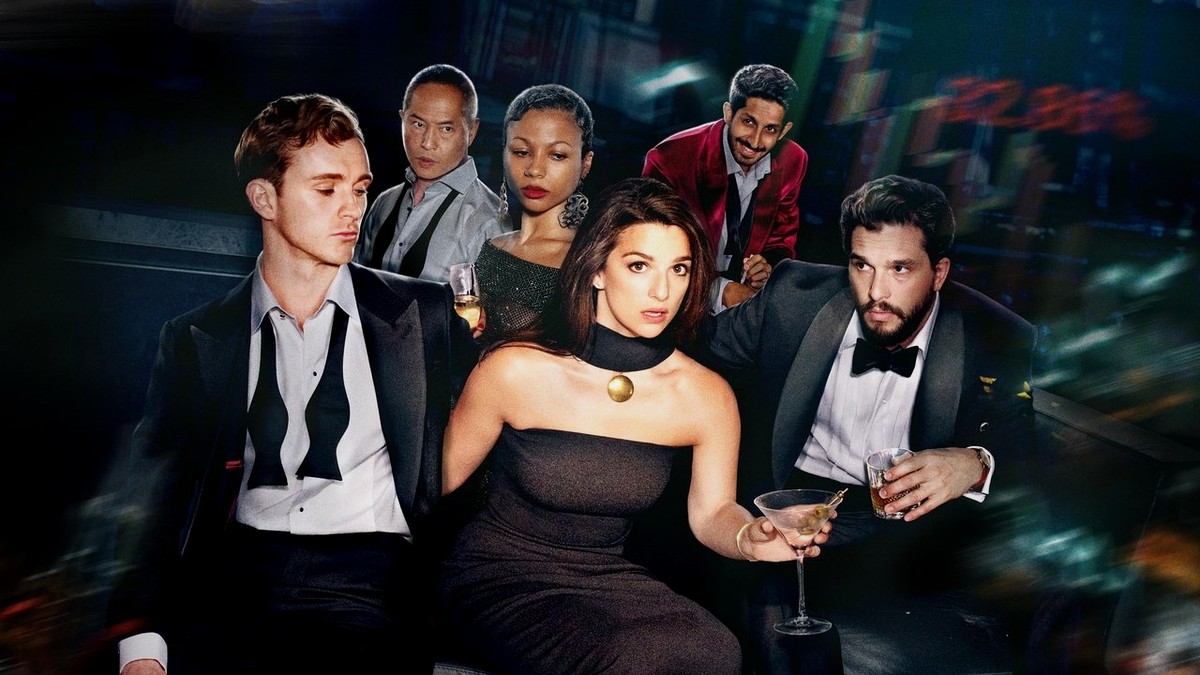
The Yasmin storyline is the season's quieter triumph. Marisa Abela has always been the show's most underrated lead — Yasmin is harder to like than Harper, and the show has historically had less patience for her. S4 gives her the most coherent arc she's ever had. Her father (Adam Levy) is in legal trouble. The family publishing empire is collapsing. Her engagement is faltering. Abela plays each of these collapses with a controlled exhaustion that's genuinely affecting. Whether or not Yasmin survives the season's final hour is the question the finale leaves open. The choice that gets her there is earned.
The Eric Tao material is less successful. Ken Leung is one of the best actors on television, and the season gives him real work — Eric's relationship with Harper has always been the show's emotional engine, and S4 deepens it — but the show seems unsure what to do with him outside that relationship. The scenes of Eric navigating his post-Pierpoint identity sometimes feel like the show going through the motions of giving him plot.
The Whitney material works as long as Max Minghella is playing it. The character is essentially a 2026 Tom Wambsgans — an outsider clawing into a fortified world he doesn't fully understand, performing competence while internally aware he's fooling everyone. Minghella plays the character with a barely-concealed panic that lands every time it surfaces. The show occasionally has him do or say things that feel slightly out of character — moments of confidence the character hasn't earned — but those are written rather than performance problems.
The season also reckons more openly than past seasons with its own theme of performance versus reality. Industry has always been about people performing for each other in rooms while the actual stakes are something else entirely. S4 makes that explicit. Multiple scenes are constructed around the gap between what's being said in the room and what's actually happening underneath. The show trusts the audience to track both layers simultaneously. Most of the time, it works.
Where it doesn't work is the season's tendency toward grandiosity. Variety's Alison Herman flagged this in her review, and she's not wrong: at least once an episode, especially in the first half, Industry makes a choice that feels like it's chasing the size of Succession rather than the texture of itself. A subplot involving European political intrigue feels imported from a different show. A surprise reveal in episode seven leans more melodramatic than the show has earned. The season is generally smart enough to course-correct from these moments quickly, but the urge to be larger sometimes shows.
Then again, almost every prestige TV drama has this problem in later seasons. Mad Men had it. The Wire mostly didn't, but The Wire is the exception. Succession had it in its final season too. The fact that Industry tips this way in S4 puts it in good company. The choice to keep pushing rather than coast on the original formula is itself a sign of seriousness.
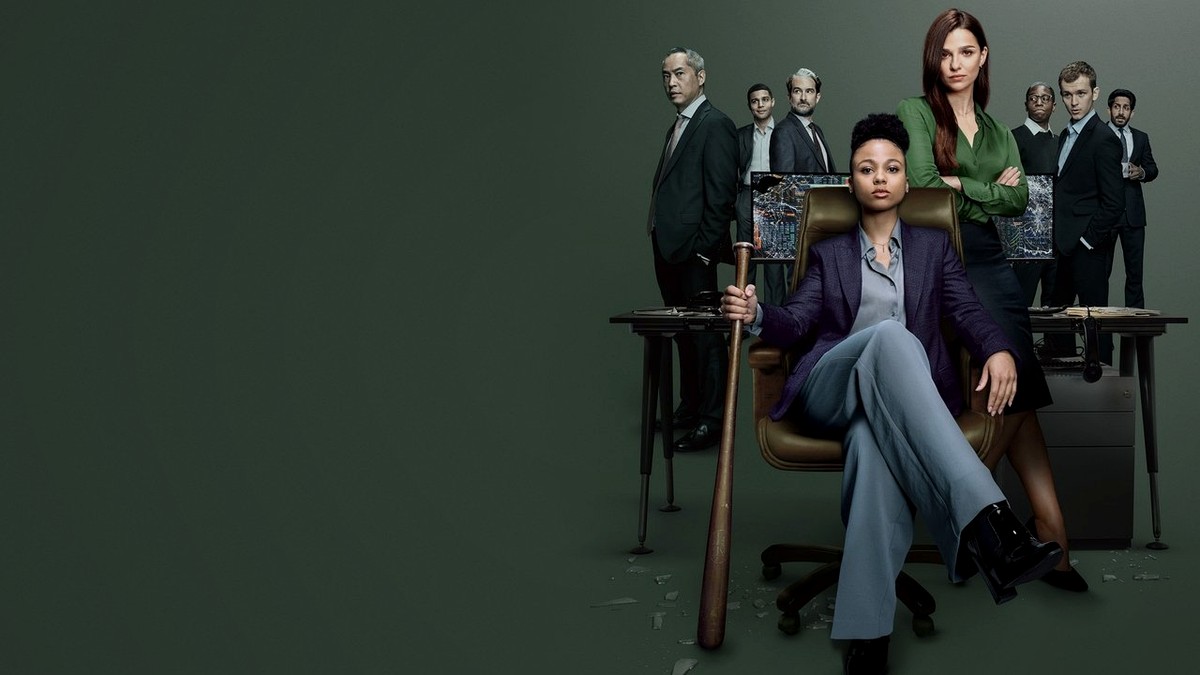
The finale lands. The Harper / Yasmin / Eric triangle resolves in a way that's neither the obvious choice nor the show's usual cynicism. The Whitney storyline ends on a note that opens up the next season without feeling like a cliffhanger. Mickey Down and Konrad Kay, who direct half the season themselves, have figured out how to land a finale.
Industry S4 is the best season the show has produced and one of the strongest seasons of any HBO drama since Succession ended. It's also genuinely uneven in ways the first three seasons weren't. Both of those things can be true. The show's willingness to break itself and rebuild — to throw out the structure that worked and trust that a new one will emerge — is the kind of ambition prestige TV doesn't always reward but absolutely deserves.
After Succession, the question of which HBO drama would inherit the post-prestige-TV throne has been open. The Gilded Age and House of the Dragon are doing different work. The White Lotus is doing different work. Industry, with this season, has put itself in the conversation in a way it never quite was before. Whether it stays there depends on S5.
Either way, S4 is the most exciting eight episodes of TV I've watched this year.
Where to Watch
All eight episodes of Industry Season 4 are streaming on HBO Max. Episodes are also available for purchase on Amazon Prime Video and Apple TV.
If you haven't watched the previous three seasons, start there. Industry rewards binge-watching from the beginning. Seasons 1-3 are also on HBO Max. The show runs 32 episodes total across all four seasons, plus the previously confirmed S5 in production for 2027.
The bottom line: Industry S4 is HBO's best current drama. Ambitious, occasionally messy, anchored by Myha'la's career-defining performance. The show has earned its seat at the prestige-TV table. 9/10.
For more on the prestige TV era this show belongs to, see our Wire vs Breaking Bad piece. For where the rest of that era is streaming, our Where to Stream Prestige TV guide covers the broader landscape.
Final Score
HBO's best current drama. Ambitious, occasionally messy, anchored by Myha'la.