
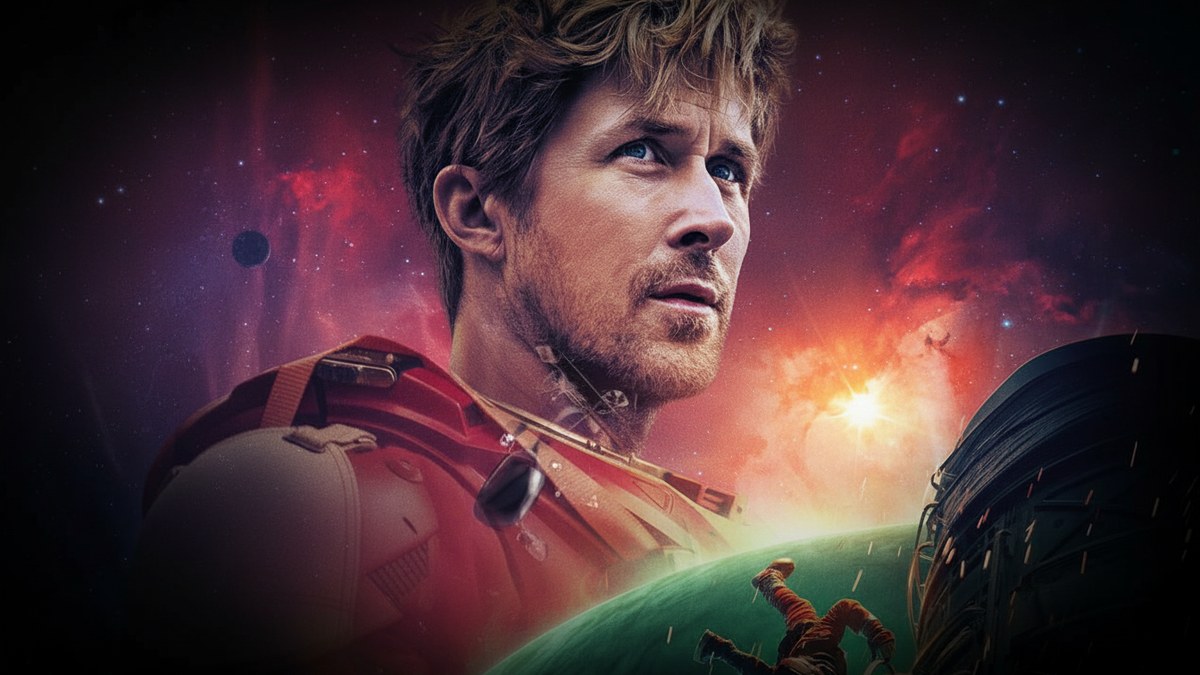
Verdict: Project Hail Mary is the rare studio blockbuster that earns every inch of its $200 million budget. Ryan Gosling is doing career-best work. The Lord-and-Miller direction is a near-miracle of tonal control. Rocky — the alien character animated through a combination of practical puppetry and visual effects — is the most surprising piece of cinematic craft in any 2026 film so far. See it in IMAX. 9.5/10.
There's a specific kind of movie that almost stopped existing in the 2020s: the original, non-franchise studio film with a single A-list star, a big budget, and the confidence to bet on a smart premise without any pre-existing fan base. Oppenheimer was one. Sinners was one. One Battle After Another was one. Project Hail Mary, opening to $141 million worldwide in March on the way to over $500 million globally, is the latest and arguably the most surprising.
The film is directed by Phil Lord and Christopher Miller, whose previous live-action work is mostly comedy (21 Jump Street, The LEGO Movie — animated but Lord-and-Miller in voice, Solo: A Star Wars Story before they were fired from it). They haven't directed a live-action feature in over a decade. Project Hail Mary is their first major dramatic project, adapted by Drew Goddard (The Martian) from Andy Weir's 2021 novel. The film has no preexisting franchise weight. Its star, Ryan Gosling, is the only globally recognizable name in the cast.
The film opened to the best non-franchise opening since Oppenheimer. It dropped 32% in its second weekend — almost unheard-of for a film opening that big. It currently holds 94% on Rotten Tomatoes (96% audience), an A CinemaScore, and is being talked about as a serious Best Picture contender even though we're only halfway through 2026.
Most of this is earned.
The premise: Ryland Grace (Gosling) wakes up in a small chamber on a spacecraft. He has no memory of who he is, where he is, or why he's there. Two other people are in chambers next to him. Both are dead. The ship is light years from Earth. The first 40 minutes of the film are about Ryland piecing together the answer to those three questions — what is this place, who am I, why am I here — using only his own observational ability and the clues the ship itself provides.
This is a structural conceit only Lord and Miller could pull off in a $200 million studio movie. The audience knows nothing. The protagonist knows nothing. Information arrives slowly, in scientific increments, as Ryland figures out which buttons do what. Most studio films would cut this sequence in half and load it with exposition. Lord and Miller trust the audience to be smart enough to enjoy the figuring-out. It's one of the most patient opening acts in any major studio film of the decade.
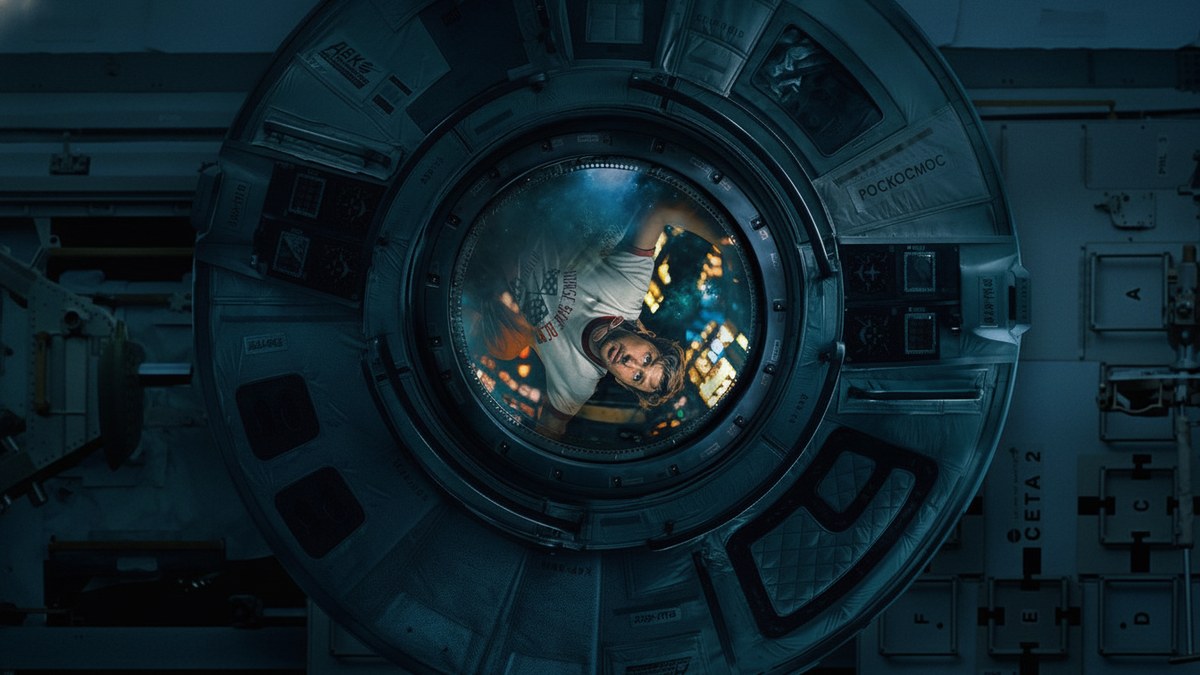
The reveal — once Ryland's memory returns — is one of those premises that sounds almost stupid in summary and works completely in execution. An alien astrophage has been feeding on Earth's sun, dimming it. Earth has 26 years before mass extinction. Ryland is a former scientist (now a middle-school teacher) who was drafted onto the Hail Mary mission as a last-ditch attempt to find a solution. He went into cryosleep with two other astronauts. They didn't survive. He did. He's alone. He has to solve the problem alone. And then, about halfway through the film, he finds out he's not alone — because another civilization, also dying because of the same astrophage, has sent its own ship on the same mission. And one of its crew members is still alive.
Enter Rocky.
Rocky is a spider-shaped alien created by Neal Scanlan's creature shop (the team behind the Star Wars sequel trilogy creatures and Furiosa) and performed by puppeteer James Ortiz. The character is roughly 50% practical puppetry and 50% CG animation, with Ortiz on set with Gosling for every scene. The result is a creature that has texture in a way modern CG characters usually don't, and chemistry with Gosling in a way that no fully-digital character could have replicated.
Rocky is the heart of the film. Watching Ryland and Rocky figure out how to communicate — they have completely different sensory ranges, different chemistries, different physical forms — is the emotional spine of the second hour of the film. The way they end up communicating (which I won't spoil) is the kind of imaginative breakthrough that earns the film its emotional payoffs. By the time you realize how attached you've become to a spider-shaped alien voiced by a puppeteer, the film has done its job.
Gosling is the other half of the equation. This is the best performance he's given since La La Land, and possibly the best work of his career. Ryland Grace is structurally a Cast Away role — most of the film is one actor alone or in conversation with someone non-human — and Gosling carries 90% of the runtime by himself. The performance is built on Gosling's specific gift for sincerity under controlled goofiness. Ryland is a science teacher. He thinks in equations. He has a slightly nerdy comedic register. He's also profoundly alone, profoundly responsible for the fate of every life on Earth, and profoundly aware of his own inadequacy to the task. Gosling plays all three of these simultaneously and never lets one register collapse the others.
The flashback structure is the film's only significant weakness, and even that's mostly a strength. As Ryland's memory returns, the film cuts to Earth in the years before the Hail Mary launch. Sandra Hüller (Anatomy of a Fall) plays Dr. Eva Stratt, the scientist running the mission. These flashbacks fill in essential information about the astrophage crisis, the mission planning, and Ryland's reluctant recruitment. They're well-acted and well-written. They also occasionally interrupt the momentum of the present-tense space mission, especially in the second act when the Earth side of the story slows down to develop secondary characters. Some viewers will find these breaks structurally necessary. Others will wish the film stayed on the ship.
I'm in the second camp, but the flashbacks are good enough that the criticism is mild. Hüller is doing strong work in a role that asks her to be ruthlessly pragmatic in a way that opens up genuine ethical questions about what people are willing to do to save the species. Her final scene with Gosling is the most emotionally complex moment in the Earth-side material.
The visual treatment is by Greig Fraser, whose résumé (Dune, Dune: Part Two, The Batman, Oppenheimer) is the most credentialed cinematographer working today. The ship interiors are designed with the same hard-science specificity Fraser brought to Dune's sandworm sequences. The space exteriors are restrained — no operatic Christopher Nolan space-opera grandeur, just the cold practical reality of being very far from home. The IMAX shots are real IMAX shots, not upconverted. See it on IMAX if you can. The film loses real impact at home, even on a good TV.
The other thing worth noting is the tonal control. Lord and Miller have always been able to balance comedy and emotion in animated work. The question with Project Hail Mary was whether they could do it in live-action without the cushion of animation conventions. They can. The film has multiple laugh-out-loud moments — Ryland's first communication breakthroughs with Rocky have the timing of a great sitcom — and it also has multiple sequences of genuine sadness and existential weight. Neither register undermines the other. That's the hardest balance in studio filmmaking. Lord and Miller pull it off.
The film's flaws are real but minor. The 2.5-hour runtime feels earned but tight — losing 10 minutes from the Earth flashbacks would have helped. The final act is slightly less surprising than the first two. The score (Daniel Pemberton) is good rather than great. None of these compound into a serious problem. They're the kind of complaints critics raise about films they basically love because there has to be something to complain about.
Project Hail Mary is the kind of film that justifies the existence of the studio system. It cost $200 million to make. It needed every dollar. It's an original story, with no franchise, no superheroes, no preexisting IP that anyone outside Andy Weir's readership would recognize. And it's currently the highest-grossing original film of the year, on its way to potentially a billion dollars worldwide.
The lesson for Hollywood is the same lesson Oppenheimer and Sinners taught: audiences will show up for original work if the work is good and the marketing trusts them to be smart. Amazon MGM Studios trusted the audience here. The audience repaid the trust.
Go see it. In IMAX if possible. This is the kind of film cinemas were built for.
Where to Watch
Project Hail Mary is still in wide theatrical release as of May 2026. The film has an extended theatrical window — Amazon MGM Studios has not yet announced its streaming date.
When it does land on Prime Video (expected late summer or fall 2026), home viewing will work fine but won't fully capture the film. See it theatrically if you can.
What If I Haven't Read the Book?
You don't need to. The film stands on its own. Andy Weir's novel is excellent and worth reading either before or after — the book has more scientific detail than the film can include, and Weir's prose voice is part of the experience — but the film is structured to work as a standalone. No homework required.
What If I've Already Read the Book?
The film makes some sensible structural changes. The most significant: a major character's identity is shifted in the casting (you'll know which one). The change is defensible and works on screen. Other changes — the flashback structure, the time spent on the Eva Stratt material, the visual rendering of Rocky — are all in the service of cinema rather than book-fidelity. Most readers will find the adaptation honors the source. Some won't. That's adaptation.
The bottom line: Project Hail Mary is the first great film of 2026 and probably the most important one for the future of original studio filmmaking. Gosling is at peak charm. Rocky is unforgettable. The science is rigorous, the heart is real, the IMAX experience is worth the trip. 9.5/10.
For more sci-fi adjacent to this film's territory, see our 10 Mind-Bending Movies to Watch If You Loved Inception list.
Final Score
The first great film of 2026. See it in IMAX.