
Spoiler warning: minor setup details ahead, nothing past episode 2.
Shōgun is the best show you've been putting off. Start it this week.
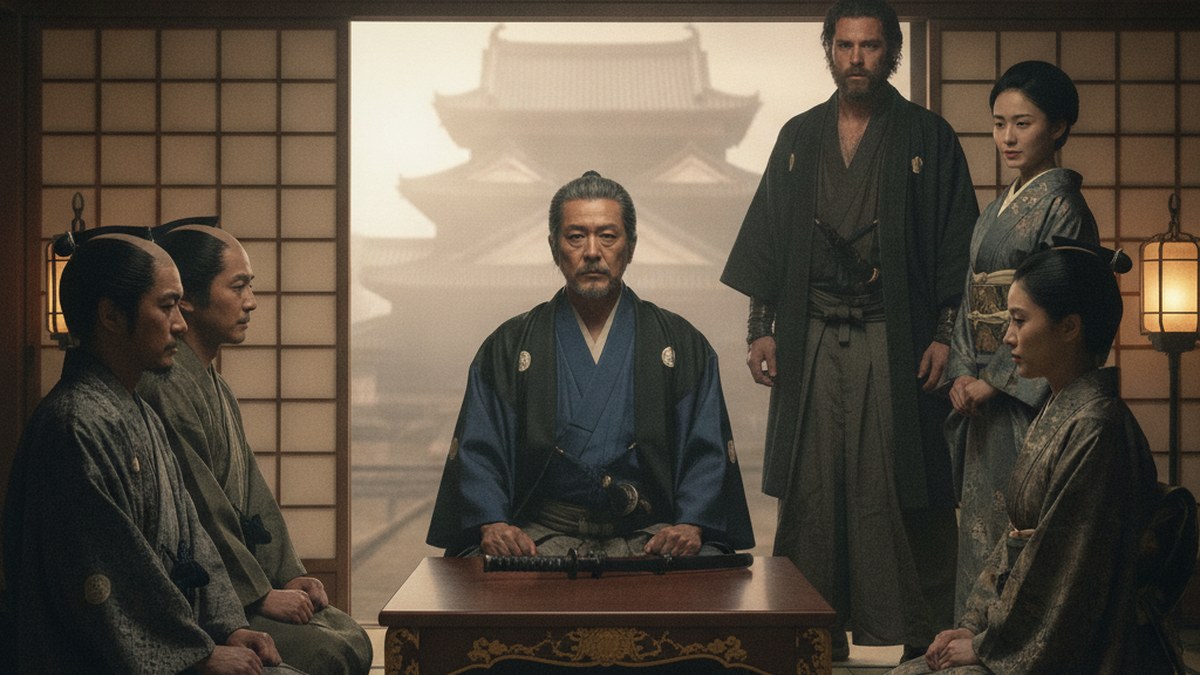
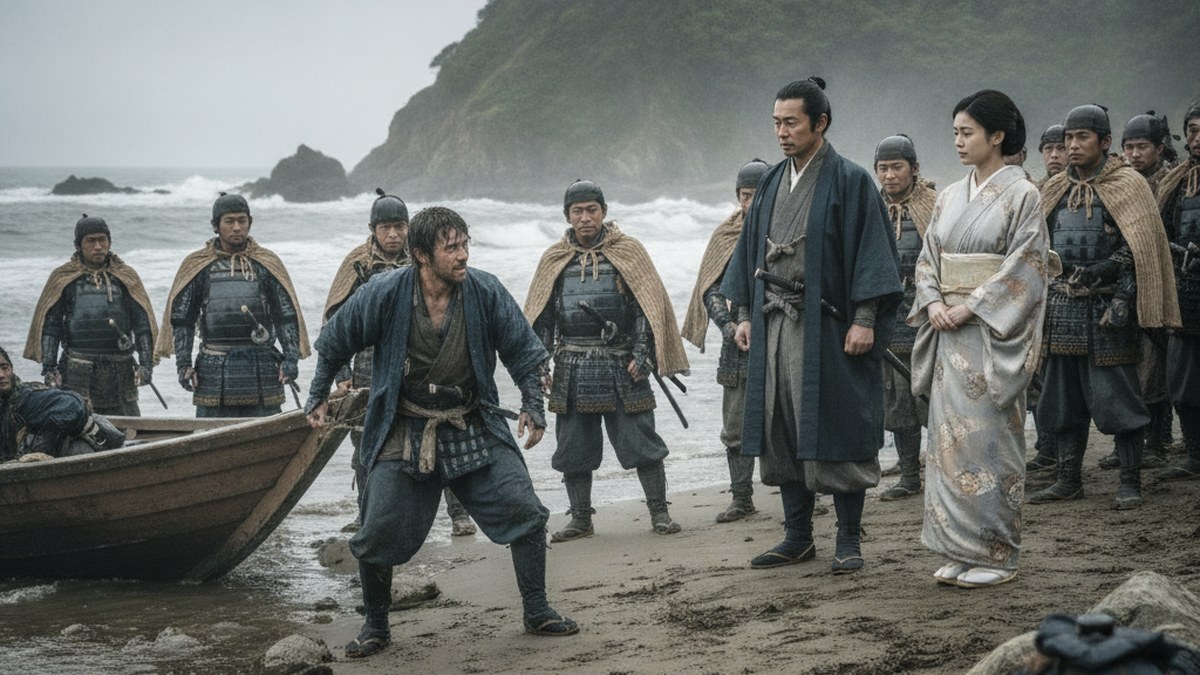
Shōgun is an FX historical drama set in Japan in 1600, at the start of a civil war that will determine who rules the country for the next 250 years. Lord Yoshii Toranaga (Hiroyuki Sanada) is one of five regents on a ruling council — and the other four want him dead. When an English sailor named John Blackthorne (Cosmo Jarvis) washes up on shore with a Dutch ship full of secrets, Toranaga sees an opportunity. The Portuguese have held a trade monopoly with Japan for decades; Blackthorne is a threat to that, which makes him useful.
Toda Mariko (Anna Sawai) is the only person who can translate between them. She ends up doing a lot more than translating.
Season 1 is 10 episodes, complete, and streaming on Hulu and Disney+.
Is It Actually Slow?
Yes, and it's worth it.
The first two episodes take their time — there's a political web, a religious power struggle, and a cultural gap all being established at once. If the pilot doesn't grab you, give it one more episode. By episode three you'll know.
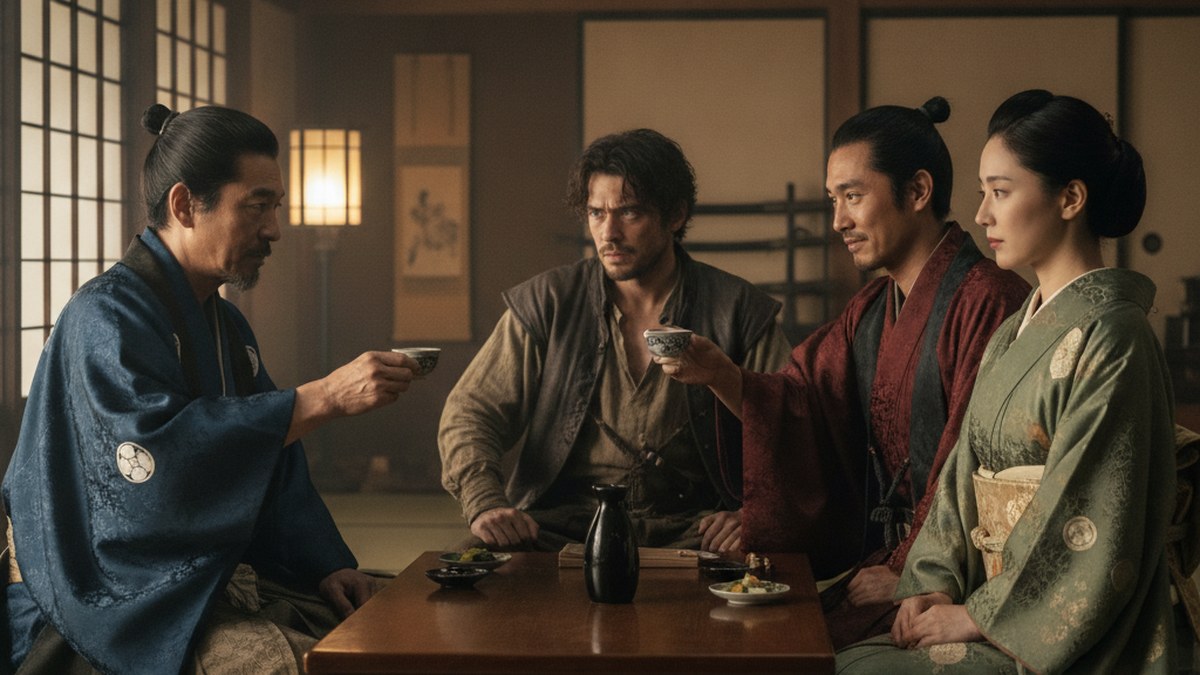
What the pacing buys you is genuine tension. This is a show where a man sitting silently across a table from his enemies is enough to make you hold your breath. The power plays happen in conversation, in what people don't say, in a look that lasts a half-second too long. Characters toast each other warmly while engineering each other's deaths. Nobody announces their intentions. You're watching a chess match where you can't always see the board, and that's exactly the point.
The show also has a real sense of physical danger that hits harder because of the restraint around it. Violence when it comes is sudden and final, not stylized. It makes every tense conversation feel like it could tip at any moment.
If slow-build dread is your thing — the kind where you're not sure who's outmaneuvering whom until four episodes later — Shōgun does it better than almost anything on TV in recent memory.
The Blackthorne Problem (and Why It Isn't One)
Blackthorne is the character people bounce off. He spends the first few episodes being wrong about everything — arrogant, confused, a Western protagonist who thinks he understands a situation he fundamentally does not. He's wrong about the politics, wrong about the culture, wrong about who his allies are. Some viewers find this frustrating enough to quit.
Here's the reframe: Blackthorne isn't the protagonist. Toranaga and Mariko are. Blackthorne is a lens — a useful outsider whose presence forces the show to explain things that characters born into this world wouldn't need to say out loud. His ignorance is a storytelling device, not a character flaw the show is unaware of.
The series is also quietly doing something interesting with his arc. He doesn't transform into a wise adopted son of Japan. He learns, incompletely, imperfectly, and the gap between what he thinks he understands and what's actually happening stays wide for most of the season. That's more honest than most shows bother to be about the limits of an outsider's perspective.
If you go in waiting for him to become a cool samurai, you're watching the wrong show. If you go in treating him as a secondary character who gets more interesting as the season goes on, it works.
Why 18 Emmys Isn't Hype
Shōgun swept the 2024 Emmys in a way that genuinely doesn't happen — 18 wins, breaking the record for most won by any single season of any show. Best drama series. Best actor (Sanada). Best actress (Sawai, who became the first Asian performer to win that category at the Emmys). Best directing, cinematography, costume design.
The haul makes sense when you watch it. Sanada plays a man whose entire strategy depends on never letting anyone see what he actually wants. Every scene with him is a puzzle: what does he actually need here, what is he willing to sacrifice, and how much of what we're watching is calculated versus genuine? He does most of this work without dialogue — a tilt of the head, a pause before answering, a smile that doesn't reach anywhere useful. It's one of the more controlled performances you'll see.
Sawai's Mariko operates within brutal constraints — a world that has given her almost no room — and the show never lets her be a passive victim of those constraints. She works within them, around them, and occasionally straight through them. Her loyalty is real and her agency is real, and watching the show hold both of those things simultaneously is one of its best tricks.
The production design deserves a mention too. This is a big, physical show — actual sets, actual costumes, locations that look like locations. It doesn't look like it was shot on a backlot, which shouldn't be remarkable and somehow is.
One Thing to Know Before You Start
Shōgun was designed as a one-and-done limited series. Season 1 has a real ending — complete, no cliffhanger, story resolved. You can watch it without committing to anything.
FX reversed that after the Emmy sweep. Season 2 is in production now in Vancouver, with Sanada and Jarvis both returning. It picks up 10 years after season 1, moving past the source novel (James Clavell's 1975 book) into original territory. No premiere date yet; 2027 is the realistic window per reporting from Variety and The Hollywood Reporter.
The upside: you get a finished story right now, with more coming later. That's a good position to be in.
Shōgun season 1 is streaming on Hulu and Disney+.
Is Shōgun Worth Watching?
Yes. Season 1 is a complete, 10-episode story with one of the best lead performances on TV (Hiroyuki Sanada) and a slow-burn political plot that earns every minute of its pacing. If you bounced off the pilot, give it through episode three.
Is Shōgun a Limited Series?
It was designed as one — season 1 has a real ending with no cliffhanger. FX reversed course after the Emmy sweep and ordered more, with season 2 currently in production and a likely 2027 premiere.
Final Score
The best show you've been putting off. Start it this week.