

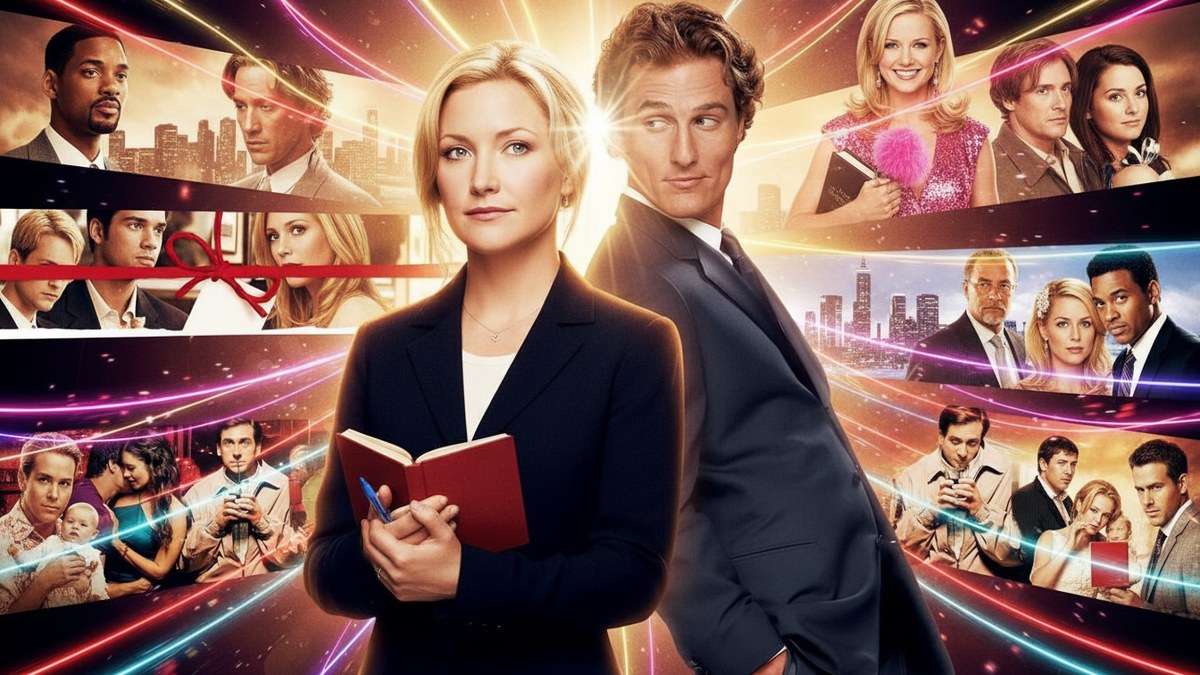
The 2000s was the last decade in which major studios consistently made theatrical rom-coms with movie-star budgets. Sandra Bullock, Reese Witherspoon, Drew Barrymore, Kate Hudson, Renée Zellweger, Cameron Diaz, and Jennifer Lopez all had multiple #1 openings in the genre. By the early 2010s, the streaming era and the Marvel era between them had collapsed the rom-com as a theatrical category — which is part of why the 2000s rom-coms now feel like a closed historical period.
These are ten of the best, structured by how the genre evolved across the decade. The early-2000s formula (Bridget Jones and Legally Blonde at the top). The mid-decade shift to Nancy Meyers's elevated rom-com and Judd Apatow's vulgar rom-com. The late-decade star vehicles (Katherine Heigl and Sandra Bullock alternating leads).
What you'll notice across all ten: these films are more confident in their voice than most rom-coms produced since. The genre knew what it was and how to do it well.
At a Glance
- Bridget Jones's Diary (2001) — Hulu/Disney+
- Legally Blonde (2001) — Hulu/Disney+
- How to Lose a Guy in 10 Days (2003) — Paramount+
- Love Actually (2003) — Peacock
- The 40-Year-Old Virgin (2005) — Peacock
- Hitch (2005) — Paramount+
- The Holiday (2006) — Peacock
- Knocked Up (2007) — Peacock
- 27 Dresses (2008) — Hulu/Disney+
- The Proposal (2009) — Disney+
01
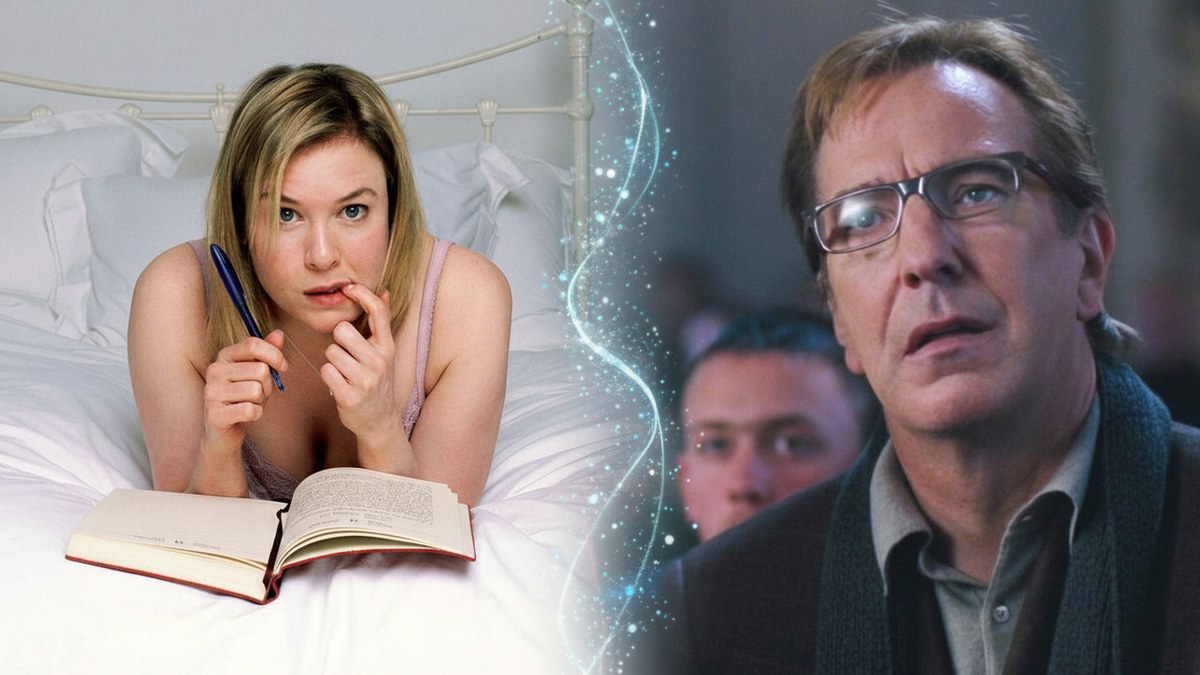
Bridget Jones's Diary (2001)
Where: Hulu (now integrated into Disney+).
Sharon Maguire directs. Renée Zellweger as Bridget Jones, a 32-year-old London publishing executive who starts a diary documenting her year of trying to get her life together. Hugh Grant as the charming-but-trouble Daniel Cleaver. Colin Firth as the awkward-but-good Mark Darcy.
Bridget Jones's Diary opened the decade by establishing the template most 2000s rom-coms would follow: a flawed female protagonist with a self-deprecating internal voice, two competing love interests structured as a charming-cad-versus-stoic-good-guy choice, and a comedic tone that took its central character's interiority seriously without becoming melodrama. Zellweger won her first Oscar nomination for the role and gained 25 pounds for it, which was treated as more remarkable than it should have been at the time.
The film also did the most important thing a rom-com can do — it made you actually want the couple to end up together. Firth's Mark Darcy walking across a snowy London street in a green jumper remains one of the cleanest visual moments in any 2000s rom-com.
Watch on Hulu/Disney+.
02
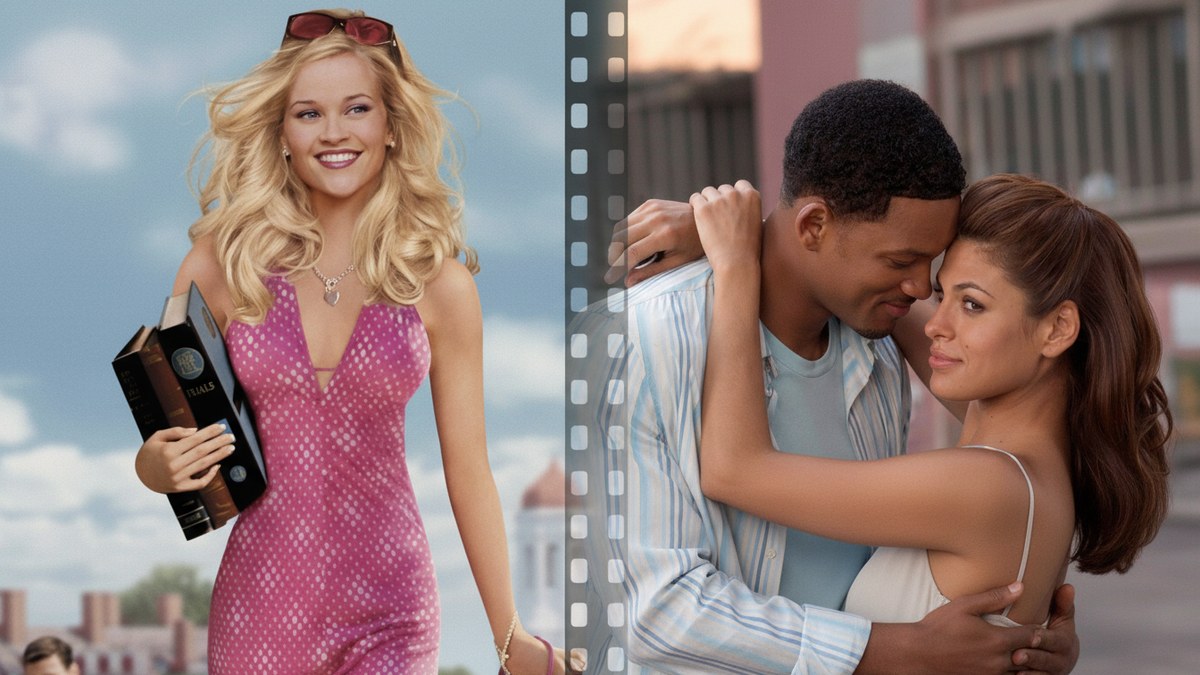
Legally Blonde (2001)
Where: Hulu (now integrated into Disney+).
Robert Luketic directs, Reese Witherspoon stars as Elle Woods, a sorority president who gets into Harvard Law School to pursue her ex-boyfriend and ends up becoming a brilliant lawyer. Luke Wilson as the supportive love interest. Selma Blair as the rival.
Legally Blonde is technically a rom-com but more interestingly a character comedy about underestimation. Elle's romantic plot is actually the least important thing in the film — the love-interest payoff happens almost as an afterthought because the real story is about Elle's growth. Witherspoon's performance is comedic but also deeply committed; she plays Elle as smart from the first scene, not naive, just culturally illegible to the people around her.
The film grossed $141 million on an $18 million budget and made Witherspoon one of the most bankable female leads in Hollywood. It also became a permanent cultural reference point — Elle's Harvard admission video, the "bend and snap," the dog Bruiser Woods. The 2003 sequel exists; it's fine. The Reese Witherspoon-developed Amazon revival project is in development as of 2026.
Watch on Hulu/Disney+.
03
How to Lose a Guy in 10 Days (2003)
Where: Paramount+ (subscription).
Donald Petrie directs. Kate Hudson as a women's magazine writer assigned to write an article about driving a man away in 10 days. Matthew McConaughey as a marketing executive who's bet he can make a woman fall in love with him in 10 days. The premise is that they meet, don't know about each other's projects, and proceed.
This is the platonic ideal of the 2000s rom-com. Both leads are at their physical and comedic peak. The premise is structured so the audience knows more than the characters do, which lets every scene play on two levels. The "Love Fern" gag, the Knicks game date, Carly Simon's "You're So Vain" sequence — the film is a series of setpieces that work as comedy first and romance second.
Hudson's Andie Anderson became the template for the decade's female rom-com leads: smart, professional, sharp-tongued, and willing to do something stupid for love. McConaughey wouldn't fully evolve into the dramatic actor he is now for another decade, but the comedic instincts that would make Magic Mike and Dallas Buyers Club work are visible here.
Watch on Paramount+.
04
Love Actually (2003)
Where: Peacock (subscription).
Richard Curtis writes and directs. Hugh Grant, Colin Firth, Liam Neeson, Alan Rickman, Emma Thompson, Keira Knightley, Andrew Lincoln, Bill Nighy, Laura Linney, and roughly 17 other recognizable British actors in interlocking storylines set in London in the weeks before Christmas.
Love Actually is the most debated rom-com of the 2000s. Some viewers find it the cleanest example of the form. Others find it manipulative, sentimental, and structurally fraught — the Andrew Lincoln cue-card scene specifically has been retroactively classified as either romantic or creepy depending on the viewer. Emma Thompson's heartbreak storyline with Alan Rickman is universally agreed to be the film's emotional peak. The Bill Nighy aging-rock-star plot is universally agreed to be the most fun.
What's true regardless of taste: Curtis attempted something the genre rarely tries, which is a multi-story ensemble rom-com structured like an Altman film. The fact that it works at all is its own accomplishment. The film has become a permanent Christmas-rotation staple.
Watch on Peacock.
05
The 40-Year-Old Virgin (2005)
Where: Peacock (subscription).
Judd Apatow's directorial debut. Steve Carell as Andy Stitzer, an electronics-store employee whose coworkers discover he's still a virgin and make it their mission to fix that. Catherine Keener as Trish, the love interest. Paul Rudd, Seth Rogen, Romany Malco, Elizabeth Banks, Leslie Mann, Mindy Kaling, Kat Dennings in supporting roles.
The 40-Year-Old Virgin shifted the genre. Before this film, mainstream studio rom-coms were polished, professional, and structurally clean. After it, the Apatow mode (longer runtime, looser improvisation, vulgar humor balanced with emotional sincerity) became the dominant alternative. Carell built a movie-star career on this performance. The chest-waxing scene was real. The 12-minute deleted scenes featurette on the DVD was, for a few years, more rewatched than half of contemporary television.
The film also notably treats Andy's virginity with more dignity than the premise suggests. The film argues that Andy's life is fine, his collection of action figures is fine, his shyness is fine, and his eventual relationship with Trish has to be earned by both parties. That's a more mature thesis than most subsequent Apatow films managed.
Watch on Peacock.
06
Hitch (2005)
Where: Paramount+ (subscription).
Andy Tennant directs. Will Smith as Alex "Hitch" Hitchens, a New York date doctor who coaches insecure men through courtship rituals. Kevin James as one of his clients, a shy accountant in love with a celebrity heiress. Eva Mendes as a gossip columnist who Hitch starts dating.
Hitch was the first major rom-com to make a Black actor the romantic lead in a film that wasn't specifically about race. Smith's casting was a conscious choice by Sony — they wanted to prove a Black-led rom-com could be a global crossover hit. The film grossed $370 million worldwide and answered the question.
The Will Smith / Kevin James pairing is also genuinely funny. The "Q-Tip" dance scene became a cultural reference. James's accountant character is given more emotional weight than most rom-com sidekicks get, and the resolution of his storyline is more satisfying than Hitch's own.
Watch on Paramount+.
07
The Holiday (2006)
Where: Peacock (subscription).
Nancy Meyers writes and directs. Cameron Diaz as a Los Angeles workaholic. Kate Winslet as an English journalist. They swap houses for two weeks at Christmas and meet, respectively, Jude Law and Jack Black. Eli Wallach in a scene-stealing supporting role as Winslet's elderly neighbor.
The Holiday is the most Nancy Meyers-y of the Nancy Meyers films, which means it features extremely tasteful production design, perfect kitchens, beautiful clothes, and people with no apparent financial worries. The film also takes its emotional beats seriously in a way that most 2000s rom-coms didn't — Winslet's storyline about getting over the wrong man is more affecting than the romance with Black. Diaz's character development from emotional repression to vulnerability is structured patiently.
The film's also become an annual Christmas-rotation staple alongside Love Actually. The two films pair well as a double feature, structurally — both are British-American holiday romances built around the idea that love is what's missing from otherwise-successful lives.
Watch on Peacock.
08
Knocked up (2007)
Where: Peacock (subscription).
Judd Apatow's follow-up to The 40-Year-Old Virgin. Seth Rogen as Ben Stone, an unemployed slacker. Katherine Heigl as Alison Scott, an ambitious E! correspondent. After a one-night stand, Alison gets pregnant and they try to figure out what to do.
Knocked Up is the most argued-about Apatow film. The criticism that's stuck — that it puts an unreasonable amount of growth-and-compromise burden on Alison while letting Ben coast on charm — has merit. The film's underlying gender politics are uneven. Heigl herself called the film "a little sexist" in a 2007 Vanity Fair interview, which became its own cultural moment.
Despite that, the film holds up as comedy. The bachelor-party sequence, the bouncer scene with Craig Robinson, the Earth Day pamphlet exchange, the labor-and-delivery scenes. Rogen's performance is funny in ways his later work wouldn't always replicate. The film's flaws are real. The film is also genuinely good.
Watch on Peacock.
09
27 Dresses (2008)
Where: Hulu (now integrated into Disney+).
Anne Fletcher directs. Katherine Heigl as Jane Nichols, a perennial bridesmaid who has been a member of 27 weddings. James Marsden as the journalist she meets and clashes with. Malin Akerman as her sister. Edward Burns as Jane's boss and unrequited crush.
27 Dresses is the late-2000s rom-com formula in its most refined form. The premise is high-concept (27 dresses!), the female lead is professionally accomplished and romantically blocked, the male lead initially annoys her then turns out to be perfect, and the final-act conflict is engineered to be solvable by a single conversation. The formula was so consistent by 2008 that audiences had stopped questioning it; the films succeeded or failed entirely on cast chemistry.
Heigl and Marsden have it. The film also features a remarkably good karaoke scene to Elton John's "Bennie and the Jets" that ranks among the genre's better musical moments.
Watch on Hulu/Disney+.
10
The Proposal (2009)
Where: Disney+ (subscription).
Anne Fletcher directs (her second appearance on this list). Sandra Bullock as Margaret Tate, a Canadian-born book editor in New York who's about to be deported. Ryan Reynolds as her assistant Andrew, whom she blackmails into agreeing to a sham marriage. The film moves to Andrew's family's home in Alaska for the second act, with Betty White as his grandmother.
The Proposal closed the decade with a $317 million box office on a $40 million budget and a Reynolds-Bullock pairing that worked better than it had any right to. The age difference (Bullock 45, Reynolds 32 at filming) was treated as a non-issue by the film, which alone made it more progressive than most 2000s rom-coms. Betty White's grandmother character was 87 years old at filming and stole every scene she was in.
The film also represents the end of the era. After 2009, the theatrical rom-com largely collapsed as a Hollywood category. There would still be successful entries (Crazy Stupid Love, Trainwreck, To All the Boys I've Loved Before), but never again at the volume or the cultural penetration the 2000s achieved.
Watch on Disney+.
How the 2000s Rom-Com Evolved
Three distinct phases, looking at the list:
Phase 1: 2001-2003 — The Bridget Template. Bridget Jones, Legally Blonde, How to Lose a Guy, Love Actually (which sits across phases). Centered on smart female protagonists, structured around emotional honesty disguised as comedy, made stars out of Zellweger, Witherspoon, Hudson.
Phase 2: 2005-2007 — The Apatow Disruption + Nancy Meyers Polish. 40-Year-Old Virgin and Knocked Up on one side, The Holiday and Something's Gotta Give (Meyers's 2003 film that bridges the eras) on the other. The genre splits between vulgar male-led comedies and tasteful adult-led prestige rom-coms.
Phase 3: 2008-2009 — The Star Vehicle Plateau. 27 Dresses, The Proposal, plus a wave of Heigl and Bullock films. The formula is refined, the audience knows what it's getting, the genre starts to feel familiar in ways that would lead to its collapse in the 2010s.
Why Don't They Make Rom-Coms Like This Anymore?
A few reasons:
Theatrical economics changed. Mid-budget studio films of any genre became commercially difficult in the 2010s as franchises and superhero films took over multiplex screens. Rom-coms suffered the most because they don't generate franchise opportunities.
Streaming absorbed the audience. Netflix and Hulu rom-coms (Set It Up, the To All the Boys trilogy, Always Be My Maybe) replaced the theatrical category. The films are often good. They don't drive the same cultural conversations because they don't release into a shared theatrical moment.
The Apatow disruption was permanent. Once vulgar male-led comedy became commercially viable, the more polished female-led rom-com category lost some of its dominance. Both modes still exist; neither has the cultural penetration the 2000s versions had.
Star vehicles got harder to make. A Bullock-Reynolds pairing in 2009 was a guaranteed opening weekend. Modern audiences are less reliable about turning out for a film just because of who's in it. Franchise mechanics replaced star mechanics.
We refresh this list annually. Streaming locations for 2000s rom-coms shift between Hulu/Disney+, Peacock, and Paramount+ on roughly quarterly cycles. If you're reading this more than a year after publication, double-check before queuing up.
For more 2000s content with different genre framing, see our 10 2000s Movies You Forgot Were Great list (which covers the prestige side of the same decade).