
The 90s was the last decade in which Hollywood made mid-budget character thrillers at scale. Studios funded original screenplays. Directors got final cuts. Stars carried movies that weren't built around franchises or established IP. The result was a run of films that holds up better than almost anything in the genre that came after.
These are ten of the best, with one caveat in the title — "still hold up." Plenty of 90s thrillers don't. Some lean on gender politics that read uncomfortably now (Basic Instinct's leering, Disclosure's scolding). Some traffic in racial stereotypes that wouldn't make it past a first draft today. Some rely on technology (early cell phones, dial-up internet, fax machines) so dated they feel like comedy.
The ten below avoid those traps. They were character-driven enough that the surrounding era didn't date them, smart enough about their own conventions to feel modern, and tight enough as filmmaking to reward a 2026 viewer who comes to them cold.
At a Glance
- The Silence of the Lambs (1991) — Paramount+
- Se7en (1995) — rent ($3.99)
- Heat (1995) — Peacock
- Fargo (1996) — Max
- The Sixth Sense (1999) — Disney+
- L.A. Confidential (1997) — Max
- The Usual Suspects (1995) — rent (with caveat)
- The Fugitive (1993) — Max
- The Game (1997) — rent / Criterion
- The Talented Mr. Ripley (1999) — Paramount+
01
The Silence of the Lambs (1991)
Where: Paramount+ (subscription). Rentable on Amazon and Apple TV.
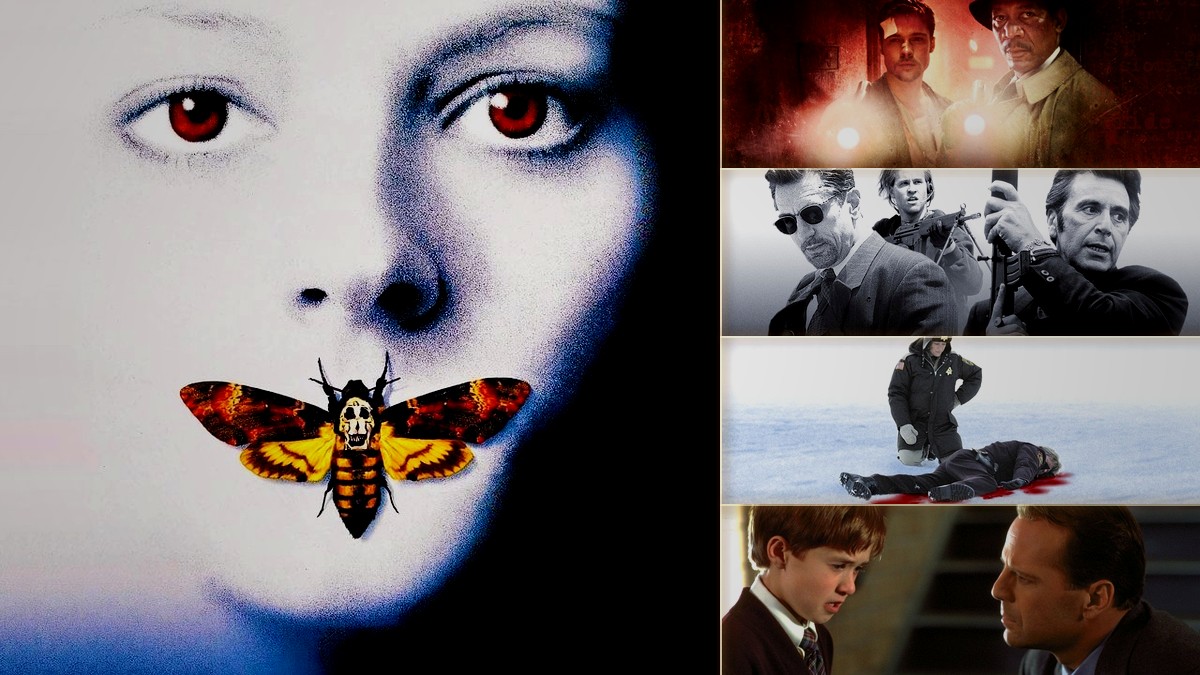
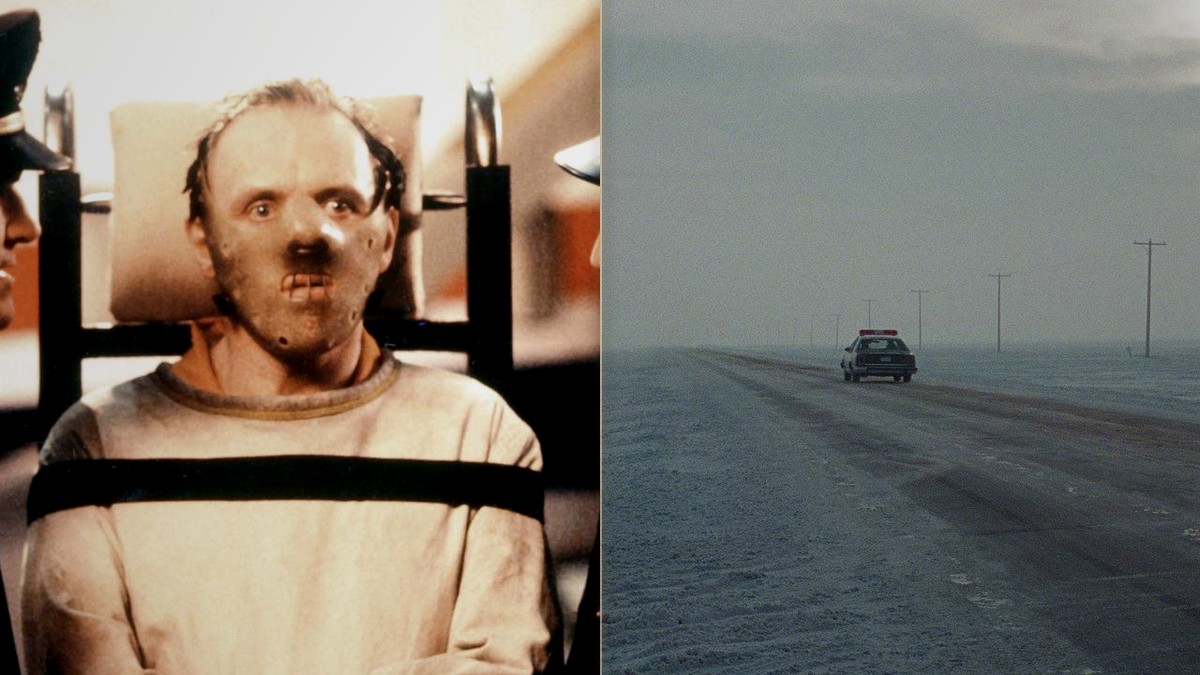
Jonathan Demme's adaptation of the Thomas Harris novel. Jodie Foster as Clarice Starling, an FBI trainee assigned to interview imprisoned cannibal Hannibal Lecter (Anthony Hopkins) to gain insight into another active serial killer. Ted Levine as Buffalo Bill, the killer they're hunting.
The Silence of the Lambs won all five major Oscars — Picture, Director, Actor, Actress, Adapted Screenplay — making it one of only three films in history to do so. Hopkins won for what amounts to 16 minutes of screen time, structured as a series of conversations through prison glass. Foster's performance is the more impressive one. Her Clarice is competent, careful, scared, and never reduced to either of the two modes most 90s female leads were limited to.
The film also raises a real critique that hasn't aged well — Buffalo Bill's coding plays into transphobic stereotypes the film tries to disclaim. Worth knowing. Doesn't break the film, but does sit alongside it.
02
Se7en (1995)
Where: Rentable for $3.99 on Amazon, Apple TV, and Fandango at Home.
David Fincher's second film and the one that made his career. Brad Pitt and Morgan Freeman as detectives chasing a serial killer (Kevin Spacey, unbilled) who is murdering people according to the seven deadly sins. Gwyneth Paltrow as Pitt's wife.
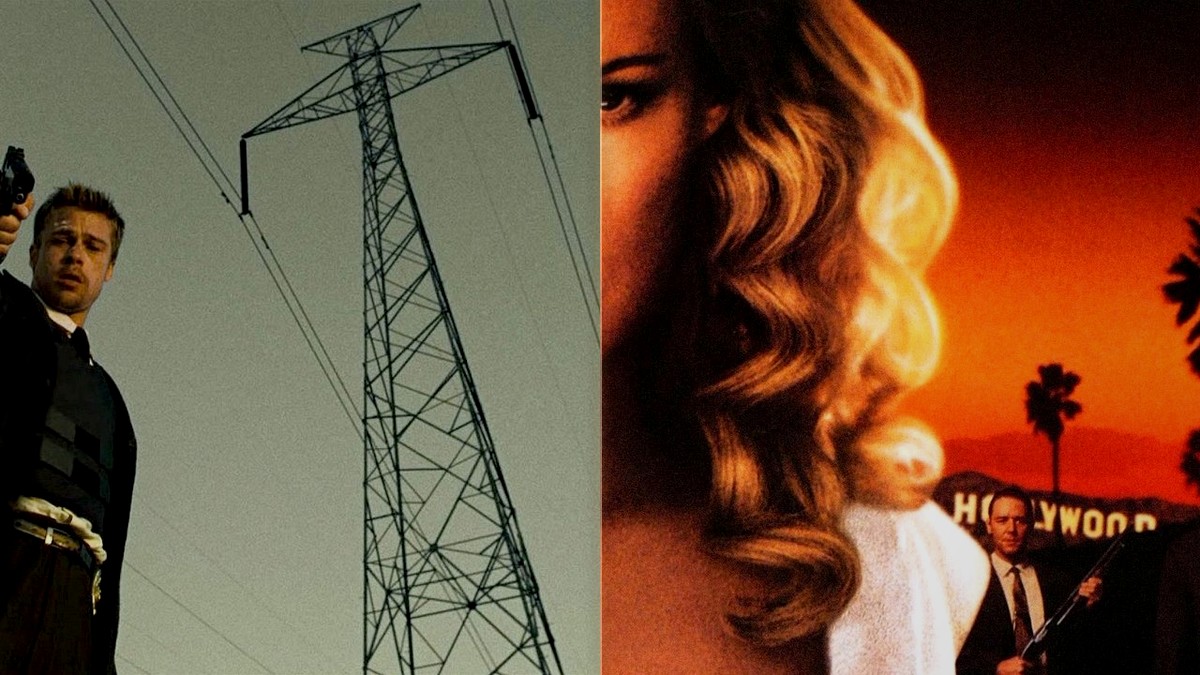
Se7en is the cleanest demonstration of Fincher's visual style at full strength — the rain-soaked, paper-trash, perpetually overcast city that's never named. The film is also notable for refusing the usual thriller resolution. There is no satisfying capture. The detectives don't outsmart the killer. The ending lands a punch that's been parodied so many times it remains effective despite everyone knowing it.
The Kevin Spacey casting is uncomfortable in 2026 in ways it wasn't in 1995. The performance still works. Watch knowing the context.
Currently in rental rotation.
03
Heat (1995)
Where: Peacock (subscription).
Michael Mann's three-hour LA crime epic. Al Pacino as a homicide detective. Robert De Niro as the lead of a high-end heist crew. Val Kilmer, Tom Sizemore, Ashley Judd, Jon Voight, Amy Brenneman, Mykelti Williamson, and Wes Studi rounding out the cast.
Heat is the film that broke open the modern crime-thriller as something with thematic weight. The famous diner scene between Pacino and De Niro — the first time the two actors had ever shared the screen — is constructed entirely from dialogue, no action, just two professionals acknowledging that one will eventually have to kill the other. The downtown LA bank robbery shootout is still the action setpiece every subsequent crime film has been measured against. The Dark Knight's opening sequence is directly modeled on it.
Mann's later work (Public Enemies, Miami Vice, Ferrari) all bear Heat's structural DNA. So does roughly half of prestige TV.
Watch on Peacock, where it landed in early 2026 as part of the platform's 90s crime expansion.
04
Fargo (1996)
Where: Max (subscription). Rentable on most platforms.
The Coen brothers' Minnesota crime film. William H. Macy as a desperate car salesman who hires two criminals (Steve Buscemi and Peter Stormare) to kidnap his wife. Frances McDormand as Marge Gunderson, the pregnant police chief investigating the case.
Fargo is the cleanest demonstration of what the Coens do better than anyone: tonal precision. The film is funny, then horrifying, then deeply sad, sometimes within a single scene. McDormand's Marge is one of the great American film characters of the 90s — patient, decent, smart, never condescended to by the script. Her "and there's more to life than a little money, you know" speech in the final scene is the cleanest moral statement any 90s thriller delivered.
The film led to the FX TV series of the same name, which is in its sixth season and remains genuinely good. Watch the film first.
Watch on Max.
05
The Sixth Sense (1999)
Where: Disney+ (subscription).
M. Night Shyamalan's breakthrough. Bruce Willis as a child psychologist treating a young boy (Haley Joel Osment) who claims he can see dead people. Toni Collette as the boy's mother.
The twist is famous to the point that most viewers come to the film knowing it. What's striking on a 2026 rewatch is how cleanly the film holds up regardless. Shyamalan structured every scene to work both ways — the first viewing as a straightforward ghost story, the second viewing with the twist visible. The shots, the dialogue, the framing — all of it pays off either way.
Osment's performance is also one of the great child performances in any 90s film, and Collette's role as a mother trying to believe her son got her her first Oscar nomination. The film is less remembered for these performances than it should be.
Watch on Disney+.
06
L.A. Confidential (1997)
Where: Max (subscription). Rentable on most platforms.
Curtis Hanson's adaptation of the James Ellroy novel. Three LAPD detectives — Russell Crowe as the brutal one, Guy Pearce as the careerist, Kevin Spacey as the celebrity adviser — investigating a multiple-murder at a Los Angeles diner in 1953. Kim Basinger as a high-end call girl. James Cromwell as their captain.
L.A. Confidential lost Best Picture to Titanic in 1998, which most viewers in retrospect think was the wrong call. The film is structurally one of the tightest neo-noirs ever made — every scene serves the plot, every character has a complete arc, the conspiracy gradually reveals itself in a way that respects the audience's intelligence. Hanson and Brian Helgeland's screenplay won the Oscar that the film should have also won.
The Spacey caveat applies here as it does to Se7en and The Usual Suspects. The performance is still good. The context still matters.
Watch on Max.
07
The Usual Suspects (1995)
Where: Currently rentable for $3.99 on Amazon, Apple TV, and Fandango at Home.
Bryan Singer's neo-noir. Kevin Spacey as Verbal Kint, a small-time crook narrating the events of a Long Beach pier heist gone wrong to a police investigator (Chazz Palminteri). Stephen Baldwin, Gabriel Byrne, Benicio del Toro, and Kevin Pollak as the other criminals.
The twist is one of the most famous in 90s cinema. The film's reputation is also genuinely complicated. Director Bryan Singer has faced sustained sexual abuse allegations since 2017, several of which involved minors. Spacey's career collapsed over similar allegations in 2017. The film has not aged into comfort for many viewers.
What's true is that The Usual Suspects remains a brilliantly constructed piece of misdirection — Spacey's performance and Singer's pacing both work in ways that wouldn't if the structure had any seams. Whether you can or want to watch it knowing what's underneath is a personal call. We include it here because the craft is real. We acknowledge the discomfort because pretending the craft exists in a vacuum doesn't help anyone.
Currently rentable.
08
The Fugitive (1993)
Where: Max (subscription).
Andrew Davis's adaptation of the 60s TV series. Harrison Ford as Dr. Richard Kimble, a Chicago vascular surgeon falsely convicted of murdering his wife and on the run after escaping a prison-transport bus. Tommy Lee Jones as the US Marshal hunting him.
The Fugitive won Jones a Best Supporting Actor Oscar and grossed $369 million worldwide on a $44 million budget. The film also represents a kind of mid-budget studio thriller that effectively no longer exists — a star vehicle with a clear premise, no franchise obligations, no superhero costumes, just two extremely competent actors playing extremely competent characters in an extended chase.
The dam jump is the famous moment. The Chicago hotel pursuit sequence is the better one. The film is unusually generous to its supporting cast — Joe Pantoliano, Daniel Roebuck, and the other deputies all get character moments — and that generosity is part of why it holds up.
Watch on Max.
09
The Game (1997)
Where: Rentable on Amazon and Apple TV. Available with Criterion Channel subscription.
David Fincher's third film. Michael Douglas as a wealthy San Francisco banker who receives a mysterious gift from his brother (Sean Penn) — enrollment in a personalized "game" that gradually takes over his life. Deborah Kara Unger as the woman who appears at the edges of the game.
The Game is the most underrated film in Fincher's filmography. It was poorly received at release — many critics found the third act unsatisfying — and has aged into a cult favorite that holds up better than its reputation. Douglas's performance is some of his best work, and the film's central paranoia (am I being toyed with, by whom, for what reason) plays better in 2026 than it did in 1997.
The ending divides viewers. It worked for me. It might not for you.
Rentable on most platforms.
10
The Talented Mr. Ripley (1999)
Where: Paramount+ (subscription).
Anthony Minghella's adaptation of the Patricia Highsmith novel. Matt Damon as Tom Ripley, a young grifter sent to Italy to retrieve a wealthy American playboy (Jude Law). Gwyneth Paltrow, Cate Blanchett, and Philip Seymour Hoffman in supporting roles. The film tracks Ripley's gradual takeover of Law's character's life.
The Talented Mr. Ripley is closer to a character study than a conventional thriller, but the tension is genuine and the structural commitments are real. Damon does some of the best work of his career — the performance is built around Ripley's loneliness and his terrifying willingness to do anything to escape it. Law was Oscar-nominated for what is essentially a supporting role.
The Italian Riviera cinematography is also one of the most gorgeous things in any 90s film. Watch in 4K if possible.
Watch on Paramount+.
What Didn't Make the Cut
A few notable exclusions:
Pulp Fiction (1994), Reservoir Dogs (1992) — Both belong on a "best 90s thrillers" list. We covered both in our Tarantino streaming guide instead.
Goodfellas (1990) — More crime drama than thriller, and on a different list.
Basic Instinct (1992) — Genuinely a 90s thriller, genuinely doesn't hold up. The gender politics, the lesbian-coding-as-villain framing, the leering camera. Skip.
JFK (1991) — Stone's conspiracy film. Powerful filmmaking, but the conspiracy theorizing has aged into uncomfortable territory in a 2026 conspiracy-saturated media environment.
Cape Fear (1991) — Scorsese remake. De Niro's performance is great, but the film overall reads more melodramatic than thrilling on rewatch.
What Makes a 90s Thriller Hold Up?
Three things, looking at the list:
Character over plot mechanics. The films that hold up best are the ones built around specific characters, not around twist-of-the-week scenarios. Heat is a film about two professionals who happen to be on opposite sides of the law. Fargo is a film about Marge Gunderson. Silence of the Lambs is a film about Clarice. Plot machinery dates faster than character does.
Restraint with technology. Most 90s thrillers leaned heavily on tech that's now obsolete — pay phones, dial-up, faxes, early cell phones. The films on this list either avoid that or use it sparingly. Fargo's most-quoted scene happens around a wood chipper, not a computer.
Visual confidence. The 90s was the last decade when American studio films had genuinely distinct visual signatures. Fincher's rain. Mann's electric blue. The Coens' Midwestern flatness. Hanson's neo-noir LA. Watching these films now is partly an experience of seeing what mainstream cinema can look like when directors are given room to develop a style.
We refresh this list annually. 90s catalog films rotate between streamers more often than newer films do, especially on Max and Paramount+. If you're reading this more than a year after publication, double-check before queuing up.
For more 90s content, see our Where to Stream Friends, Seinfeld & Other 90s Sitcom Classics guide. For the post-90s prestige TV that grew out of these thrillers, see our Wire vs Breaking Bad piece.