
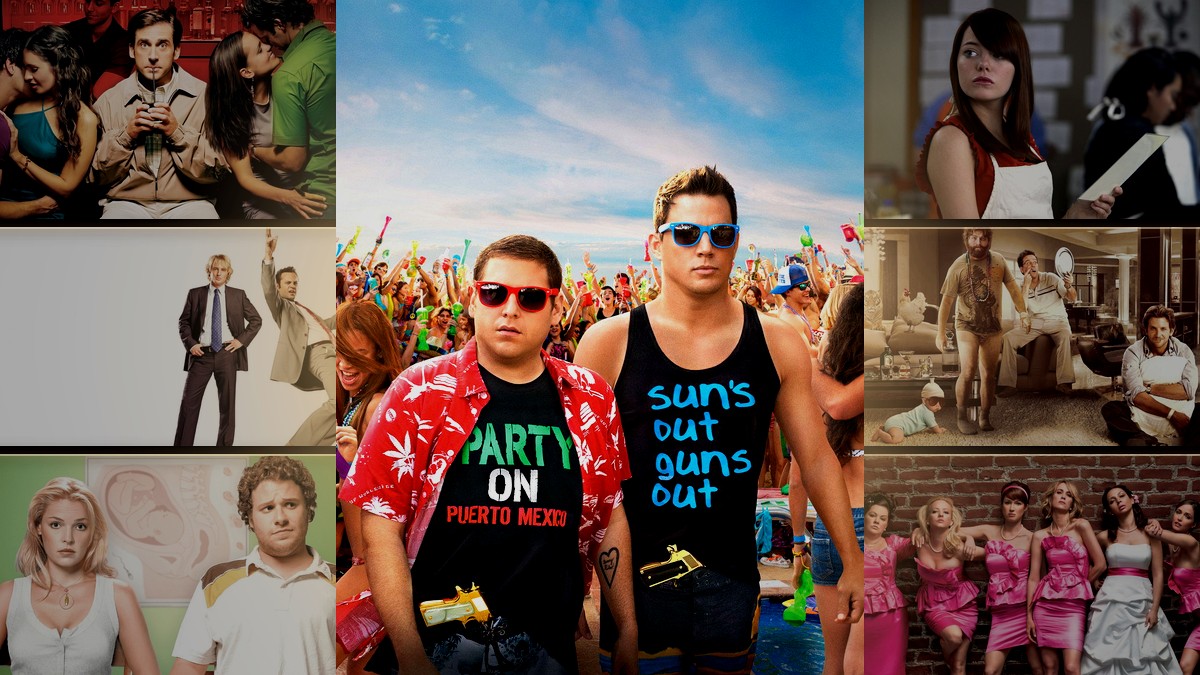
In 2014, 22 Jump Street made $192 million at the domestic box office. R-rated. Male-led. Summer release. Original screenplay (well, sequel to a TV adaptation, but you get it).
It was the last R-rated summer comedy fitting that description to clear $100 million in the United States. We're 12 years out from it. Nothing has replaced it.
The mid-budget studio comedy didn't die overnight. It died in installments. And in 2026, we're standing in the aftermath asking a question every comedy writer in Hollywood asks at least once a year. Why did this happen, and what (if anything) brings it back?
The Peak
For about a decade, roughly 2005 to 2014, the mid-budget studio comedy was the most reliable bet in the business.
The numbers are wild now. The 40-Year-Old Virgin in 2005 made $177 million worldwide on a $26 million budget. Wedding Crashers the same year made $288 million on $40 million. Knocked Up in 2007: $219 million on $30 million. Superbad: $169 million on $20 million. The Hangover in 2009 took $467 million worldwide on $35 million and produced two sequels.
Then Bridesmaids hit in 2011. $306 million on $32.5 million, two Oscar nominations, and a watershed moment that proved female-led R-rated comedies could match the male ones at the box office. The Heat, Trainwreck, Bad Moms, Spy, and Pitch Perfect followed in the next five years.
The economics worked. A studio could put $30 million into a comedy with a star or two, market it for another $30 million, and reasonably expect $100-150 million in box office. That's a profitable movie. Multiply that by five or six per studio per year and you've got a genre that funds the rest of your slate.
Then it stopped working. Then it stopped happening.
What Changed
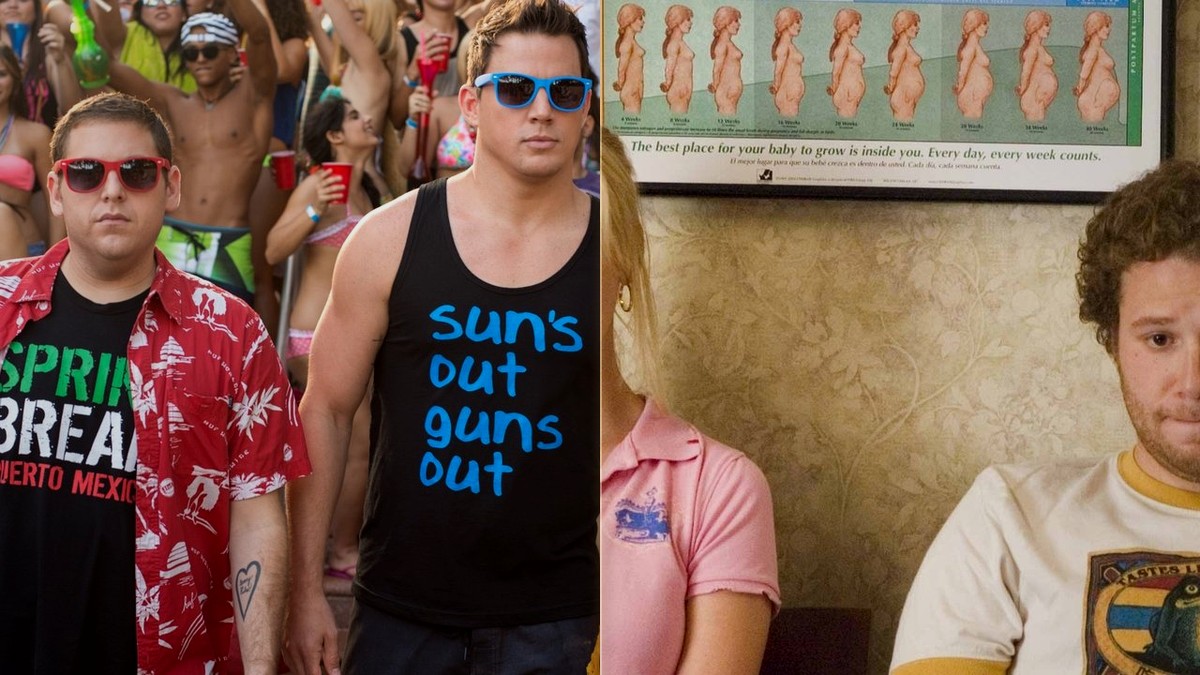
A bunch of things, all roughly at the same time.
Streaming bought the genre. Adam Sandler's Happy Madison signed an exclusive deal with Netflix in 2014. Murder Mystery (2019) was reportedly the most-watched original movie in Netflix history at that point. Hubie Halloween, The Wrong Missy, You Are So Not Invited to My Bat Mitzvah, Happy Gilmore 2. All Netflix. Sandler used to anchor the summer multiplex. Now he's the Netflix engagement king. Same actor, same audience, completely different distribution model.
Apatow followed. The King of Staten Island premiered on PVOD in 2020 because of the pandemic. Bros tried theatrical in 2022 and flopped. Apatow's most recent comedy production is Jackpot! (2024), which went directly to Prime Video. The most reliable comedy producer of the 2000s makes streaming movies now.
The audience changed how it watches comedy. Mid-budget comedy lived on word of mouth. The Hangover was the kind of movie you saw because three friends told you it was the funniest movie of the year. That word-of-mouth marketing assumed a theatrical experience with friends, post-movie conversations, and quotability across the next six months.
The audience that did this in 2010 doesn't exist anymore. People watch comedy alone, on phones, on YouTube clips, on TikTok edits of the best two-minute scenes. The full theatrical experience that comedy was built around is gone. Comedy isn't less popular. The format that monetized it is broken.
Marvel ate the multiplex. This part isn't unique to comedy. Mid-budget anything has been crowded out of theaters by the franchise dominance of the 2010s. Studios still make $200 million tentpole bets because those work theatrically. They don't make $40 million comedy bets because the math doesn't support it when those movies aren't reliably hitting $150 million the way they used to.
The Apatow generation aged out. Will Ferrell is 58. Steve Carell is 63. Tina Fey is 56. Seth Rogen is 44 and has mostly pivoted to producing. Kristen Wiig is 53. Melissa McCarthy is 55. The comedy stars who built the genre are now grown adults playing grown-adult roles, and they haven't been fully replaced by a new generation of theatrical comedy leads.
There are exceptions. Glen Powell has done comedy. Ayo Edebiri has done comedy. Bowen Yang. Ramy Youssef. But the system that generated star-level comedy box office (movie → cult favorite → next bigger comedy → star vehicle) doesn't exist anymore. Comedy stars are made by streaming and TV now, not by the theatrical pipeline.
Comedy fragmented. What used to be "the mid-budget studio comedy" split into three or four overlapping micro-genres. The dramedy (The Big Sick, Plus One, I Want You Back). The horror-comedy (Get Out, Bodies Bodies Bodies, Companion, anything in the Edgar Wright orbit). The romance-comedy hybrid (Anyone But You, Set It Up, To All the Boys I've Loved Before). The wedding/event-driven comedy.
None of these is exactly the mid-budget studio comedy. All of them ate part of its lunch.
What Survives
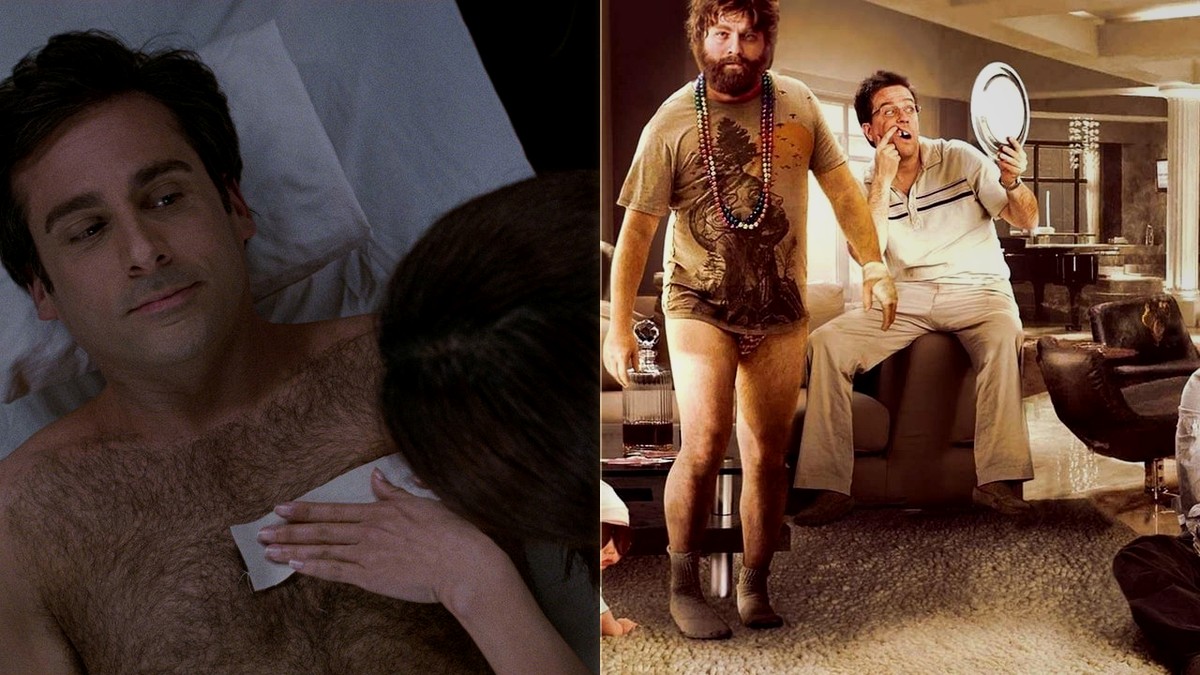
The mid-budget comedy isn't dead. It's been redistributed.
Streaming. The Sandler movies, the Apatow productions, the Ricky Gervais standup-adjacent stuff. Netflix is producing more comedy now than the studio system did at its peak. The quality is variable but the volume is staggering. Netflix released 39 original movies in 2025. A lot of them were comedies.
Romance-comedy theatrical wins. Anyone But You (2023) made $220 million worldwide on a $25 million budget. Ticket to Paradise (2022) made $172 million. Marry Me (2022) underperformed but didn't lose money. The rom-com is the closest functional descendant of the mid-budget studio comedy that still works in theaters, and it's the one genre where Glen Powell, Sydney Sweeney, and Penn Badgley are making theatrical bets that pay off.
Horror-comedy as the actually-funny option. Bodies Bodies Bodies, Renfield, Companion, Heretic, M3GAN. These are technically horror films, and they are also some of the funniest movies of the last five years. The horror frame gives comedy the genre engine that lets it work theatrically again.
The standup-to-streaming pipeline. Comedy careers used to be built through movies. Now they're built through standup specials, then podcast, then streaming series, then maybe a movie. Hasan Minhaj, Bo Burnham, Hannah Gadsby, Pete Davidson. None of them made the theatrical run that Will Ferrell did in the 2000s, and none of them needed to.
What Might Bring It Back
Judd Apatow said it in 2025. If someone made something as funny as The Hangover right now, it would make a billion dollars.
He's probably right. The audience hasn't forgotten how to laugh. The audience has just stopped going to theaters for comedies because no one has given them a reason to in a decade.
The case studies that could change this are forming. Anyone But You proved theatrical rom-com still works. Top Gun: Maverick proved an event movie can be a comedy at heart (much of that movie is two-handers with great timing). Barbie proved that comedy plus brand plus moment can do $1.4 billion.
The harder case is the Hangover-shaped hole. A movie that's just funny, with no IP attached, no franchise, no high-concept hook beyond "this thing happens and then funnier things keep happening." That movie hasn't been made for theatrical release at the mid-budget tier in years. Someone making it would need to convince a studio to bet $40 million on a comedy without IP, market it for $30-40 million more, and trust that audiences will show up.
Studios aren't built for that bet anymore. The risk profile shifted. The streaming alternative gave them an exit.
But Apatow's right that the swing is available. The first studio that puts an Anyone But You-tier budget into a balls-out R-rated comedy with two charismatic leads will probably find that the audience isn't dead. The audience is just bored.
The Mid-Budget Comedy Ecosystem in 2026
Here's where the genre actually lives now:
On Netflix: Adam Sandler movies, the Murder Mystery sequels, Happy Gilmore 2, They Cloned Tyrone, Hit Man (technically Netflix though it played one theater), and most of what would have been theatrical comedy in 2008.
On Hulu/FX: The Bear (more comedy than people give it credit for), Reservation Dogs, English Teacher, Ramy. Comedy migrated to FX in many of the ways it used to migrate to multiplexes.
In horror packaging: Everything mentioned above. The funniest movies in theaters right now are mostly horror movies.
As theatrical rom-coms: Anyone But You, the upcoming Glen Powell projects, anything with Adria Arjona.
In the indie space: Cha Cha Real Smooth, Theater Camp, I Want You Back, Plus One. Smaller, sweeter, less mass-appeal but actually funny.
What This Means Going Forward
The mid-budget studio comedy as a genre might not come back. Industries don't usually resurrect themselves on the same model that died. What might come back is something adjacent, a new comedy form that figures out how to work in 2026 the way the Apatow comedy worked in 2007.
The question is who builds it. Probably not a studio. Probably an A24 or Neon. Probably a director who hasn't broken through yet, with two stars who haven't broken through yet, working at a budget tier where the math actually works again.
In the meantime: The Hangover is on Max. Bridesmaids is on Peacock. 21 Jump Street and 22 Jump Street are on Hulu. The mid-budget comedy is preserved in amber across half a dozen streaming services, and the new ones we're getting aren't really replacements.
They're refugees.
Last updated: May 23, 2026.