
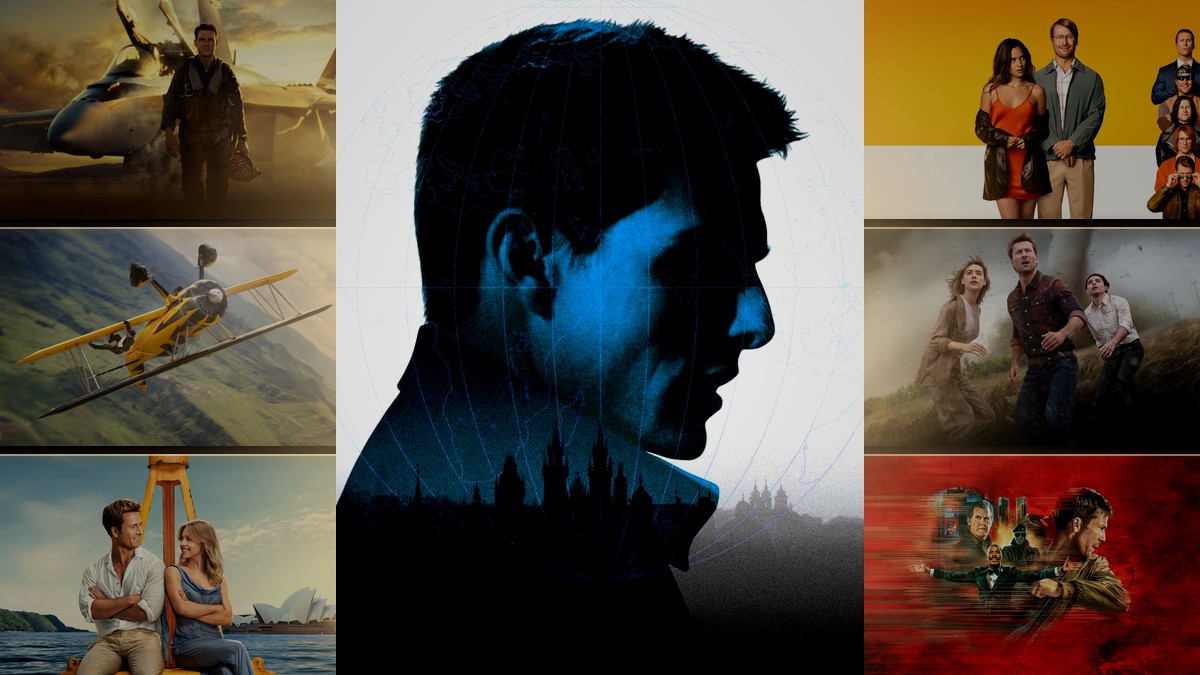
Tom Cruise is 63 years old.
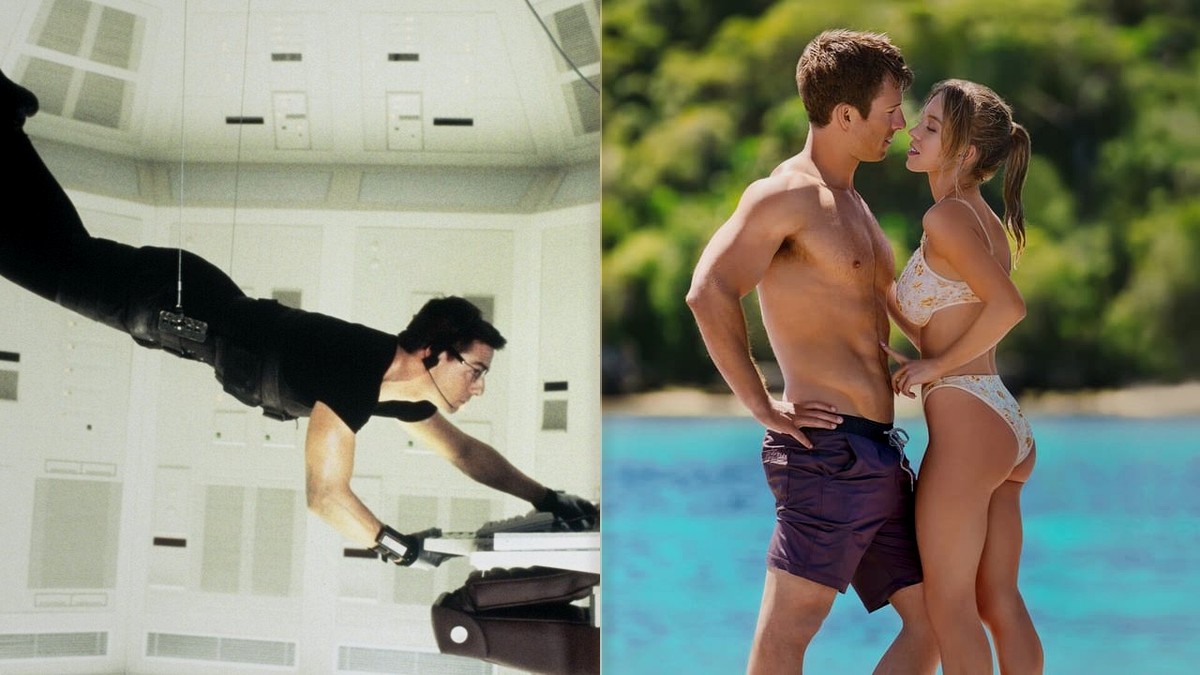
He hung off the side of a biplane in his last movie. He held his breath underwater for six and a half minutes for an earlier one. He learned to fly a helicopter on camera. He has spent a decade carrying the only theatrical action franchise that consistently makes money without a superhero suit, a Jedi, or an IP older than its actor.
He's also the last of his kind.
The classical Hollywood action star, the singular personality whose name on a marquee was enough to open a movie, is functionally extinct. Tom Cruise is doing the job alone because no one has come up behind him. The reasons are structural and they're not going to reverse themselves.
Here's what happened.
The Classical Era
For about 40 years, from the late 1970s to the mid-2010s, the action star was a specific kind of Hollywood role.
You knew the names. Stallone. Schwarzenegger. Willis. Cruise. Snipes. Van Damme. Seagal. Russell. Norris. Lundgren. Gibson. Then Statham. The Rock. Diesel. Reeves. Pitt (sometimes). Damon (sometimes). Reynolds (sometimes).
What they had in common: an audience would go see them in a movie. The movie was the action. The character was a delivery vehicle. The vehicle was the star.
The economics worked. Die Hard was Bruce Willis. Predator was Schwarzenegger. Speed was Reeves. Mission: Impossible was Cruise. The Transporter was Statham. The actor was the brand. The franchise grew around them, not before them.
You could put one of these names on a generic action plot and the movie would make $80 million domestic. You could put them on a great action plot and make $200 million. There were maybe 15 actors at any given time who could do this consistently. The system supported them, and they supported the system.
That system is gone.
The Franchise Displaced the Star
The shift started slowly in the late 2000s and accelerated through the 2010s. The Marvel Cinematic Universe was the most visible cause, but it wasn't the only one.
In the new model, the franchise IS the star. Tom Holland is Spider-Man. Chris Pratt is Star-Lord. Daisy Ridley is Rey. The character pre-exists the actor. The actor inherits the suit and the box office, but they don't own it.
Anthony Mackie put this in plain English at a 2024 London Comic Con. "There are no movie stars anymore. Anthony Mackie isn't a movie star, the Falcon is a movie star."
He's right. Mackie can't open a $100 million non-franchise action movie on his name alone. Neither can Pratt outside Jurassic World, Ridley outside Star Wars, or Holland outside Spider-Man. They're working actors with franchise paychecks, not action stars in the classical sense.
The franchise actors are paid like stars. They're marketed like stars. They're often more famous than the classical stars ever were, because Marvel marketing budgets dwarf 1990s marketing budgets. But their box office is tied to the suit. Take Mackie out of the Falcon role and put him in an original spy thriller and you'd be lucky to hit $30 million.
This isn't a knock on the actors. It's a description of how the system works now.
The Non-Franchise Spaces Collapsed
The action star ecosystem used to have several tiers of work.
Top tier: $200 million tentpole action. Schwarzenegger, Cruise, Willis.
Middle tier: $50-80 million action thrillers. Liam Neeson got Taken out of this tier in 2008. Statham built his entire career here. Denzel Washington still works here when he wants to.
Bottom tier: Direct-to-DVD, then direct-to-streaming. Where Steven Seagal lived in the 2000s. Where Bruce Willis lived in the 2010s.
The middle tier was where action stars got made. Before he was a Marvel guy, Chris Hemsworth made Rush. Before he was Spider-Man, Tom Holland made The Impossible. The mid-budget action thriller was the proving ground. You took a small action movie, made it work, then graduated to the bigger one.
The middle tier collapsed. Same reasons mid-budget comedy collapsed. Streaming bought it. Studios stopped funding it theatrically because the math didn't work without the home-video tail. The result is that there's no on-ramp anymore. You can't become an action star by building one mid-budget hit at a time, because there are no mid-budget hits anymore.
The few mid-budget action films that get made now (the John Wick movies, the Equalizer sequels, Nobody) are built around veterans (Reeves, Washington, Bob Odenkirk) who became stars in another era. The pipeline isn't producing replacements.
Tom Cruise's Specific Genius
The reason Cruise stands alone isn't just that he's still working. It's that he figured out the franchise problem and built around it.
Cruise turned Mission: Impossible into the inverse of every other franchise. In Marvel, the character is the brand and the actor is interchangeable (see: every Avenger replacement). In Mission: Impossible, Ethan Hunt is a generic name attached to whatever Tom Cruise wants to do that year. The franchise is a delivery vehicle for Tom Cruise stunts. The character has barely changed across seven films because the character isn't the point.
This is why nobody can imagine Mission: Impossible with anyone else. The replacement question that James Bond is currently navigating doesn't apply. Mission: Impossible without Cruise isn't Mission: Impossible. It's a different movie with the same title.
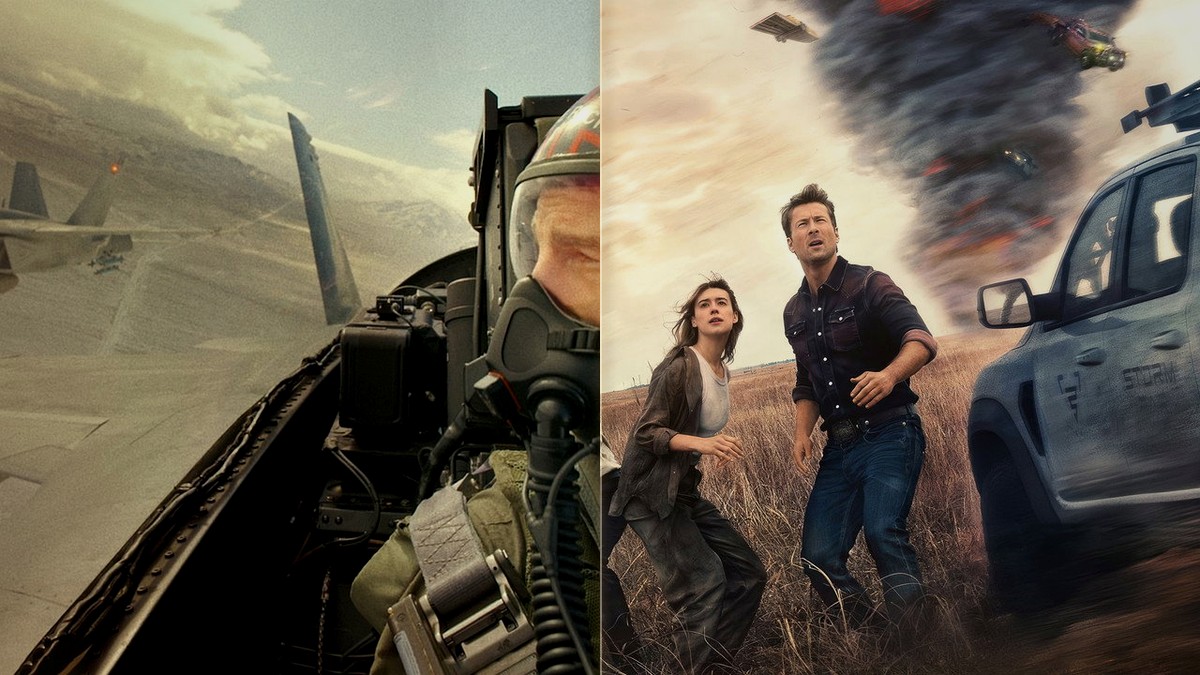
Cruise also did something no other current star has done. He bet on theatrical against streaming during the pandemic. He delayed Top Gun: Maverick twice rather than send it to streaming. He turned the Mission: Impossible press tour into a ritual defense of cinema. He showed up to AMCs with popcorn. He made theatrical loyalty part of the brand.
Top Gun: Maverick made $1.5 billion. Mission: Impossible: The Final Reckoning (reportedly his last in the franchise) held the numbers when it opened in 2025. The theatrical-loyalty bet worked because the audience that grew up on Tom Cruise still shows up for Tom Cruise.
The next generation doesn't have a Tom Cruise. They have franchise actors and streaming actors and the occasional charisma machine. They don't have anyone the audience will show up for in any movie that has their name on it.
The Contenders
A few names get floated as the potential next-generation movie star. Here's where they actually stand.
Glen Powell. The closest current bet. Top Gun: Maverick was the entry point. Anyone But You (2023, $220 million worldwide) was the rom-com proof of concept. Hit Man (2024, Netflix) was the dramatic range proof. Twisters (2024) was the franchise-adjacent test. The Running Man (2025) was the dedicated action film. Powell does his own stunts. He's been openly studying the Cruise career. Hollywood is positioning him for the throne, but the verdict isn't in yet.
Pedro Pascal. The internet's preferred answer. Pascal is a different kind of star, a character actor with leading-man charisma, more in the Hoffman or De Niro mold than the Cruise one. He's an excellent actor working at the top of his profession. He's not really an action star in the classical sense. His franchise work (The Mandalorian, The Last of Us, Fantastic Four) puts him squarely in the Mackie category, even if he's better at it than most.
Timothée Chalamet. A movie star in the older sense, a name people show up for. Not an action star. Dune (2021/2024) is the closest he gets, and that's prestige sci-fi with a director's name attached. Whether Chalamet can do the Mission: Impossible career arc is unclear because he hasn't tried.
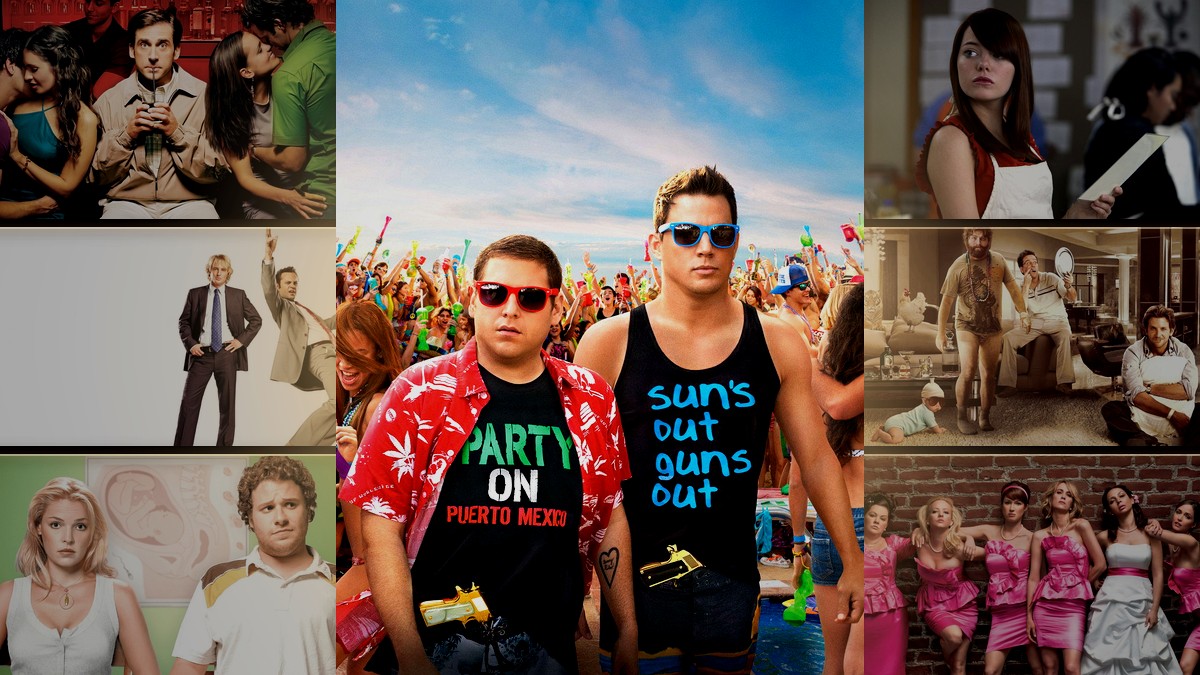
Channing Tatum. Was on the trajectory in the early 2010s. The 21/22 Jump Street movies were the pivot point. He's still working but has aged into character work rather than the leading-man action role.
Michael B. Jordan. Sinners (2025) was a moment. Creed anchored a franchise. He has the screen presence, the work ethic, and the body of work to make the case. The question is whether the system supports him enough to let him do it.
Tom Hardy. Already there in some ways. Venom, Mad Max: Fury Road, The Bikeriders. But Hardy operates as a character actor who happens to do action, which isn't quite the classical star template.
The best case for the next decade is that one of these actors, most likely Powell, becomes a real movie star in the Cruise sense. The worst case is that nobody does, and the action movie just becomes another franchise vehicle for actors who happen to be cast in it.
What Changed Under the Surface
Here's the harder truth.
The action star didn't go away because audiences stopped wanting them. The action star went away because the business model that produced them broke.
Stars used to be made by mid-budget movies. The mid-budget movie went away. So did the star.
Stars used to be made by audiences seeing them in three or four films a year and getting attached. Now audiences see actors in TV shows, streaming movies, branded podcast content, social media, and one theatrical release every two or three years. That's not enough exposure to build a Bruce Willis-level audience relationship.
Stars used to be loyal to the medium that made them. Cruise still is. Most current stars hedge between streaming, theatrical, prestige TV, IP work, and personal projects. The hedging is rational. The cost is that they don't develop a singular box-office brand.
Stars used to play themselves with different names. Schwarzenegger was always Schwarzenegger. Stallone was always Stallone. The new generation is trained out of this. To be respected as actors, they have to disappear into characters. Disappearing into characters is good for prestige TV. It's bad for movie-star economics.
The Bottom Line
Tom Cruise is going to retire from action movies someday. He's already done it once, then unretired. The Final Reckoning was supposed to be his last Mission: Impossible, but Cruise has talked about wanting to make movies into his 80s.
The real question is what happens when he actually stops. Does the action star template die with him? Or does Glen Powell or someone else figure out how to rebuild it?
The honest answer in 2026: nobody knows. Powell is making the bet. The audience is at least curious. The studios are still mostly investing in IP. The math is still mostly broken for non-franchise action.
The classical action star may end up like the western, a genre that ruled for 40 years, faded over the next 20, and now exists mostly as a nostalgia object.
Or it may come back when someone makes the right movie. Hollywood has been wrong about the obituary before.
But for now, Tom Cruise is 63 and the next generation hasn't quite shown up. We'll see what happens when he hangs up the harness.
Last updated: May 23, 2026.