
Here is the thing about Friday Night Lights: it is not about football.
I know. That sounds like the kind of thing someone says before making you watch five seasons of football. But it is genuinely true, and it is the reason I keep recommending this show to people who have never cared about a touchdown in their lives — and watching them come back a week later completely broken up about a fictional high school kicker from rural Texas.
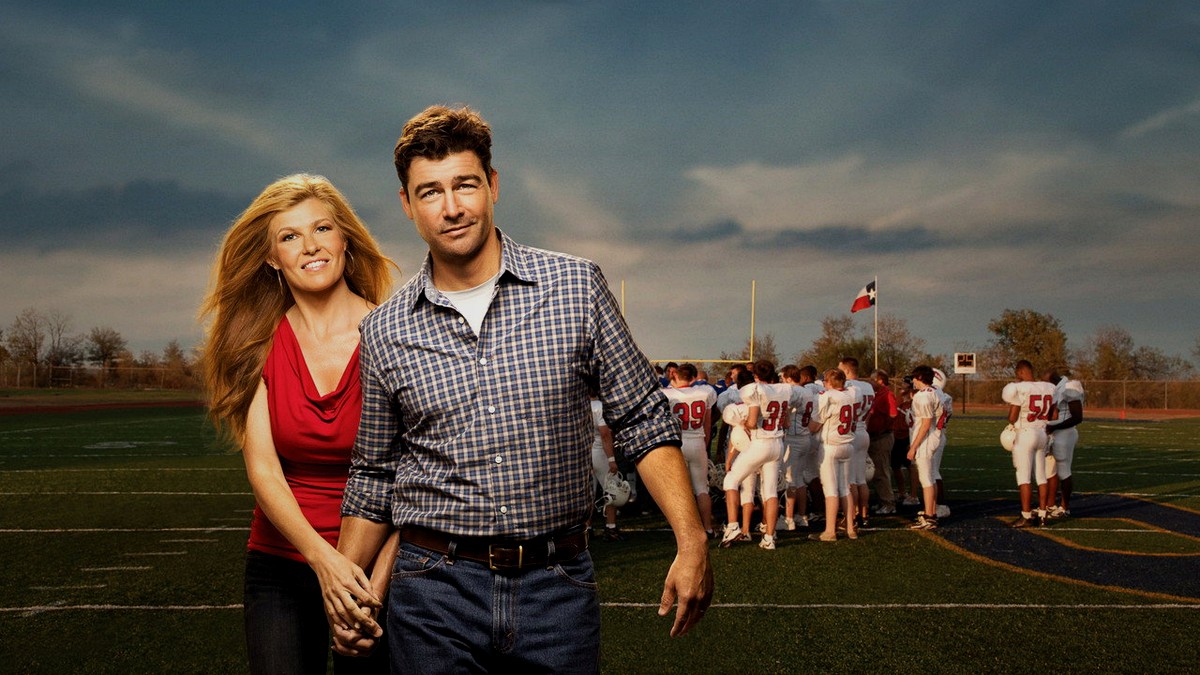
Friday Night Lights ran for five seasons on NBC and DirecTV from 2006 to 2011. It follows Coach Eric Taylor (Kyle Chandler) and his wife Tami (Connie Britton) as they navigate the pressure-cooker world of high school football in the tiny fictional town of Dillon, Texas — a place where the Panthers are basically a religion and everything else comes second. The show is based on H. G. Bissinger's 1990 book and Peter Berg's 2004 film, both of which really were about football. The TV series uses the sport as scaffolding for something else entirely.
It Is Actually a Show About People
The football happens. Games get played, championships get chased, recruits get poached. But the show's interest is always in what the games cost the people involved — not whether they win.
Take the pilot. Jason Street (Scott Porter), the star quarterback and the entire town's hope, gets a spinal injury in the first episode. He is paralyzed. The season is now about how a team, a coach, and a kid rebuild around that. Not in a sports-movie way, where everyone rallies and it is triumphant. In a real way, where some people handle it well and some people fall apart and the grief takes different shapes for everyone.
That is the texture of the whole show. It is a drama about what people do under pressure — financial pressure, racial pressure, family pressure, the pressure of being 17 and having an entire town's identity riding on your arm.
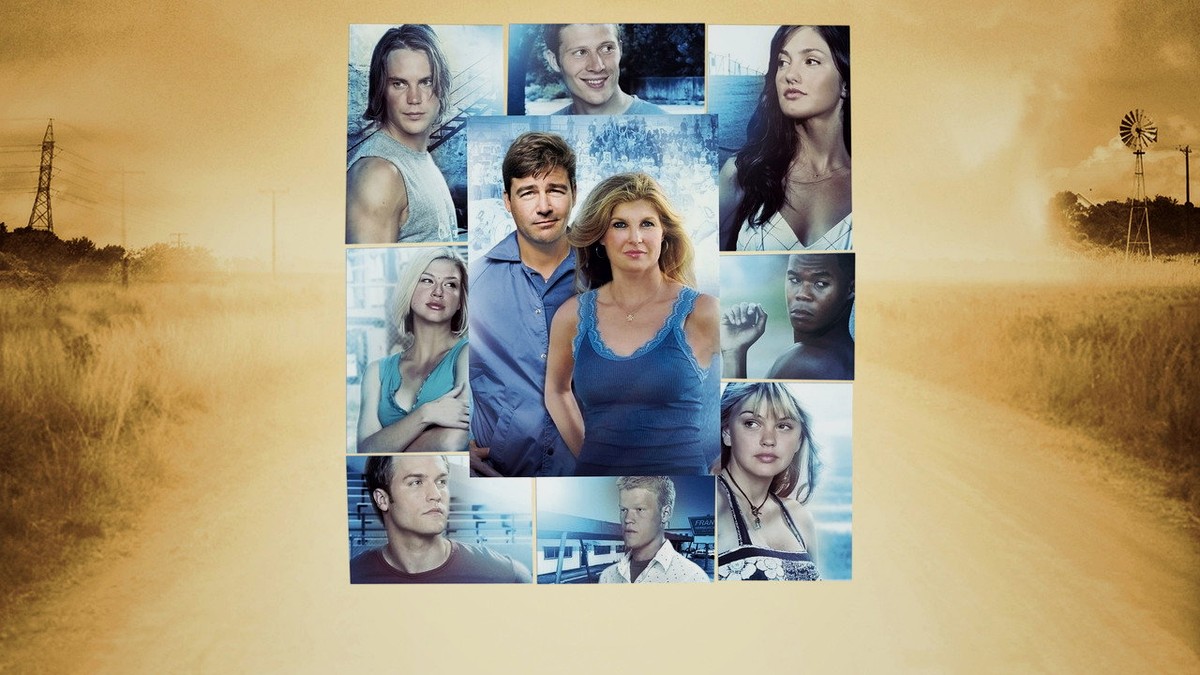
The Taylors Are One of the Best TV Couples Ever Written
I will stand on this. Eric and Tami Taylor are not a will-they-won't-they. They are not in crisis. They are a married couple who genuinely like each other, argue like actual adults, and are figuring out how to both have careers and a daughter and a life in a place that doesn't always make it easy.
Britton and Chandler have chemistry that most actors spend whole careers trying to manufacture. There is a scene in season three where Eric and Tami sit in their kitchen late at night and talk through a decision that affects both of them, and it is just two people at a table and it is one of the best-written scenes in the show. No raised voices, no dramatic music. Just two people who have been married long enough to be honest with each other.
The writers and the lead actors made a decision early on that the Taylor marriage would not have affairs, would not manufacture drama for drama's sake. Connie Britton, speaking at the show's 20th anniversary panel at ATX TV Festival, said it was a priority from her first conversation with Kyle Chandler about their roles: "We don't want our characters to have affairs." That choice is what makes the whole show land the way it does.
The Cast Is Absurdly Good in Retrospect
At the time, Friday Night Lights was a low-rated critical darling that kept nearly getting canceled. In retrospect, it was quietly building one of the most impressive casts in prestige drama history.
Taylor Kitsch, Zach Gilford, Jesse Plemons, Adrianne Palicki, Michael B. Jordan, Jurnee Smollett — all of them working through character arcs that were genuinely hard and genuinely good. Jesse Plemons plays Landry, a nervous, sweet kid who is mostly there for comic relief until he suddenly isn't, and Plemons makes every gear shift work. Michael B. Jordan shows up in season two as Vince Howard and is immediately one of the most compelling people onscreen.
Kyle Chandler won the Emmy for Outstanding Lead Actor in a Drama Series in 2011, and the show took home a Peabody Award over its run. It felt overdue at the time. Still does.

Skip Season Two, Then Come Back
Here is an honest note: season two is rough. The writers' strike cut the season short, and the storylines that were already in motion were the wrong ones. There is a subplot involving Landry that the show itself seems embarrassed about in retrospect. At the 20th anniversary panel, Adrianne Palicki basically opened that conversation by saying "remember when Landry killed a guy?" and Jesse Plemons admitted it was a surprise to him too.
Watch it, then keep going. Season three is where the show finds its second gear and it barely slows down after that.
It Holds Up in a Specific Way
A lot of TV from 2006 feels like 2006. The clothes, the phones, the cultural references — it dates quickly. Friday Night Lights doesn't, mostly because the show was shot to look almost like a documentary: handheld cameras, natural light, improvised dialogue between takes. The result feels less like a period piece and more like something real that someone filmed.
The problems the characters face — economic uncertainty, limited opportunity, the gap between the life a small town offers and the life a kid might want — are not 2006 problems. They are current. The show doesn't editorialize about any of it. It just puts people in those circumstances and watches what they do.
One More Thing
Peacock is developing a new iteration of Friday Night Lights with original showrunner Jason Katims, Peter Berg, and Brian Grazer attached. As of May 2026, Katims told TV Insider there's "no update right now," but confirmed the team is still engaged with the project. New characters, new team, same Dillon.
There has not been a better time to get through the original before anything new arrives.
Friday Night Lights, all five seasons, is streaming on Prime Video and Paramount+.