
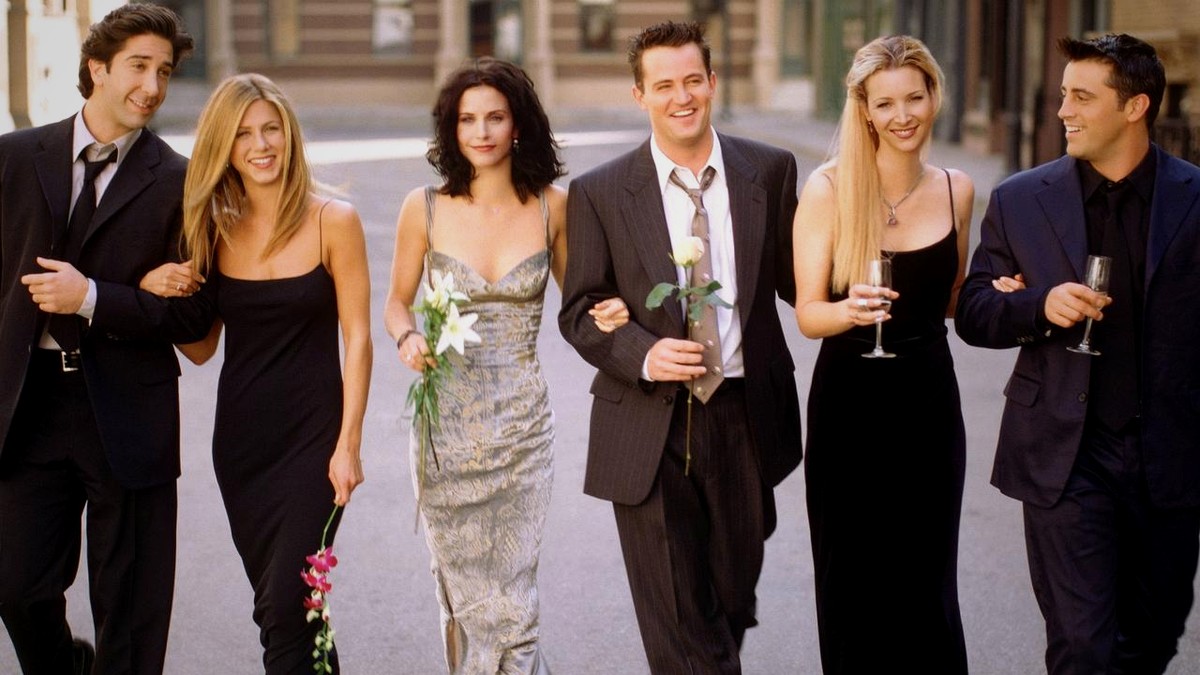
Friends premiered on September 22, 1994. The cast were all unknowns. The pilot was titled "Six of One" and got reasonable reviews, not great ones. By the third season it was the most popular show on television, and somewhere around the fifth season it started becoming the cultural artifact it still is — the one your aunt watched live, your cousin discovered on Netflix, and your fourteen-year-old niece is currently watching on Max thirty-one years after the original broadcast.
A show that is genuinely watched by three generations is not a normal TV show. So the question of whether Friends still holds up isn't really one question. It's two: does it hold up technically (the writing, the performances, the chemistry), and does it hold up culturally (the worldview, the assumptions, the jokes about who counts as funny). The honest answer is yes to the first, mostly no to the second.
Here's what that actually looks like.
What Aged Like Wine
The chemistry
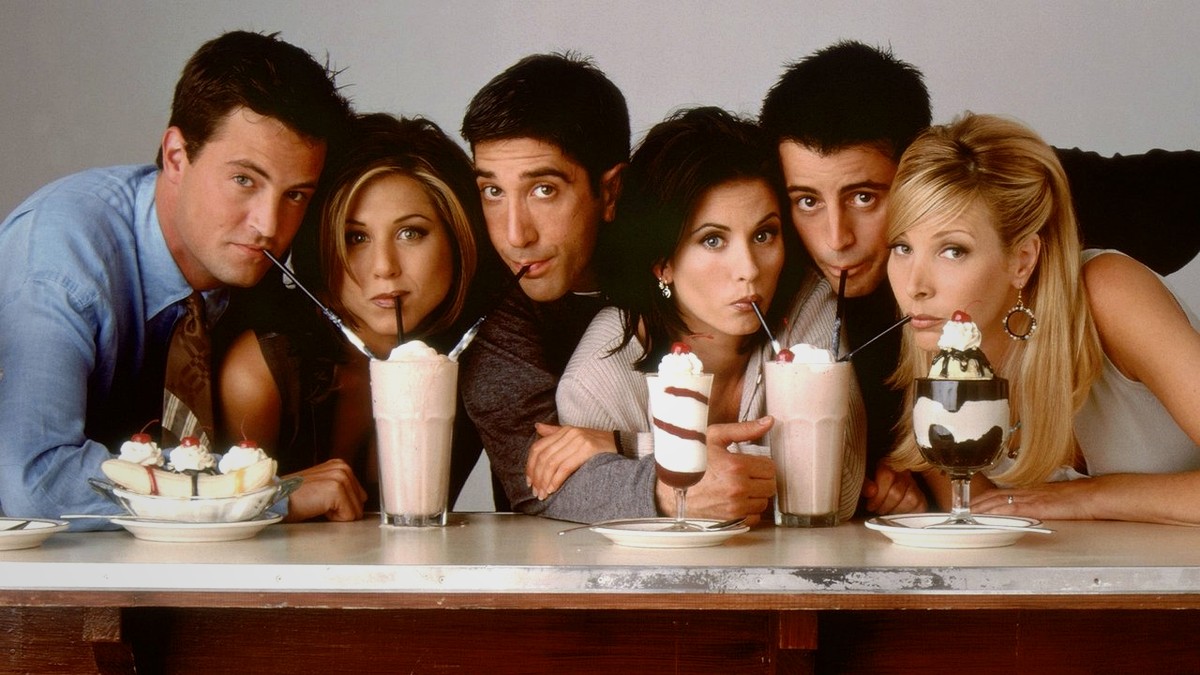
Six unknowns walked onto a Warner Bros. set in 1994 and within four episodes had built a chemistry no other ensemble sitcom has matched since. Friends gets imitated constantly — How I Met Your Mother, The Big Bang Theory, New Girl, every hangout sitcom of the last 25 years — and none of them have built six characters who feel that fully formed that quickly. Watch the pilot back. Joey is already Joey. Phoebe is already Phoebe. The friendships already feel earned in scenes that are doing a tremendous amount of exposition.
Matt LeBlanc and Matthew Perry's scenes together are the cleanest example of why this works. The two of them figured out a comedic rhythm — Joey's earnestness against Chandler's sarcasm — that runs through ten seasons without ever getting old. After Perry's death in 2023, those scenes started to read differently. They're funny in the same ways. They're also a record of a friendship that two of these actors actually had. That doesn't fix everything else about the show. It does protect those specific scenes.
The structural ambition
This part is easy to miss: Friends tackled subject matter most 90s sitcoms wouldn't touch. Infertility (Monica and Chandler's adoption arc). Surrogacy (Phoebe carrying her brother's triplets). A lesbian wedding in Season 2 (1996, when this was actually controversial). Suicide (mentioned in passing but acknowledged). Depression. Divorce as something that happens to specific people for specific reasons rather than as a punchline.
The show wrapped these in jokes, but the jokes weren't the point. Friends was operating in genuine emotional territory most of its peers wouldn't, and a lot of its rewatch value comes from how often it actually paid the emotional moments off. Ross's "We were on a break!" lands as comedy because his actual breakdown over Rachel was earned across multiple episodes.
The Joey and Chandler bromance
Probably the cleanest legacy of the show. The two of them lived together, fed each other, helped each other in surprisingly tender ways for a 90s NBC sitcom. The "Hugsy" episodes, the recliner jokes, Joey buying Chandler the gold bracelet — these are scenes built on real warmth between two heterosexual men, written without irony, played for laughs that come from affection rather than panic about affection.
Most sitcoms in 1996 were not doing this. Most sitcoms in 2026 still aren't.
What Aged Like Milk
The diversity problem
Even at the time, this was a problem. The very first cast interview in 1995 included Oprah Winfrey telling them, on national television, that they needed Black friends. They never really got any. New York City — one of the most diverse cities on the planet — was rendered as a place where six attractive white people could live in a building that contained, apparently, no one else who counted.
David Schwimmer himself talked about this in later interviews. He pushed for Ross to date women of color and the show eventually delivered (Lauren Tom as Julie in Season 2, Aisha Tyler as Charlie in Seasons 9 and 10), but those characters were temporary girlfriends rather than additions to the actual six-person ensemble. By the time the show ended, Friends had carried itself for ten seasons in a New York that felt deliberately constructed to exclude anyone outside its core demo.
Watching this back in 2026, the absence is louder than it used to be. Not because the show was uniquely bad on this — most 90s sitcoms had the same problem — but because the show was Friends. It set the template the rest of an industry copied. The lack of diversity wasn't just a Friends problem. It became a sitcom-shape problem, and Friends was the shape.
The homophobia
Chandler's relationship with his father, a drag performer played by Kathleen Turner, is the worst-aged plot in the show. The premise is that Chandler is uncomfortable with his trans-coded father, and the show treats his discomfort as the joke. By the early 2000s, the writers seem to know they're on shaky ground — Chandler has a partial reconciliation in his wedding episode — but the entire arc is built on jokes that wouldn't make it to a writer's first draft today.
Outside that storyline, the constant low-key gay-panic energy is also rough. Joey and Chandler sleeping in the same bed is a joke whose punchline is that they had to deny it constantly. Ross getting upset that the male nanny is too feminine. The barber. Ross's son Ben playing with a Barbie. There are dozens of these small moments and they all assume the audience finds the same things uncomfortable that the show does.
Some of these read as a 1996 audience that didn't know better. Some read as a 1996 writer's room that did know better and made the choice anyway.
The fat-shaming
Fat Monica is the worst single recurring bit on Friends. The flashbacks to teenage Monica being heavy and pathetic exist for the audience to laugh at her body, full stop. Courteney Cox in a fat suit eating a sandwich. Rachel mocking her at the prom. Chandler later saying he'd never have dated her at that weight.
This is not a 90s comedy convention we have to hold our nose through. This is bad in any era. Most 90s sitcoms didn't do this. Friends did it repeatedly and never paid it off in any way that complicates the joke.
The trans representation
Kathleen Turner is one of the most charismatic American actresses of her generation. The show cast her as Chandler's father and then wrote the role as a series of jokes at the character's expense. Turner herself has said she wishes she'd played the part differently. The role is uncomfortable in 2026 in ways that it was uncomfortable in 1996 too — the show just had a different audience reaction to count on.
The Matthew Perry Effect
Perry died in October 2023. The conversation about Friends shifted within a week and hasn't shifted back.
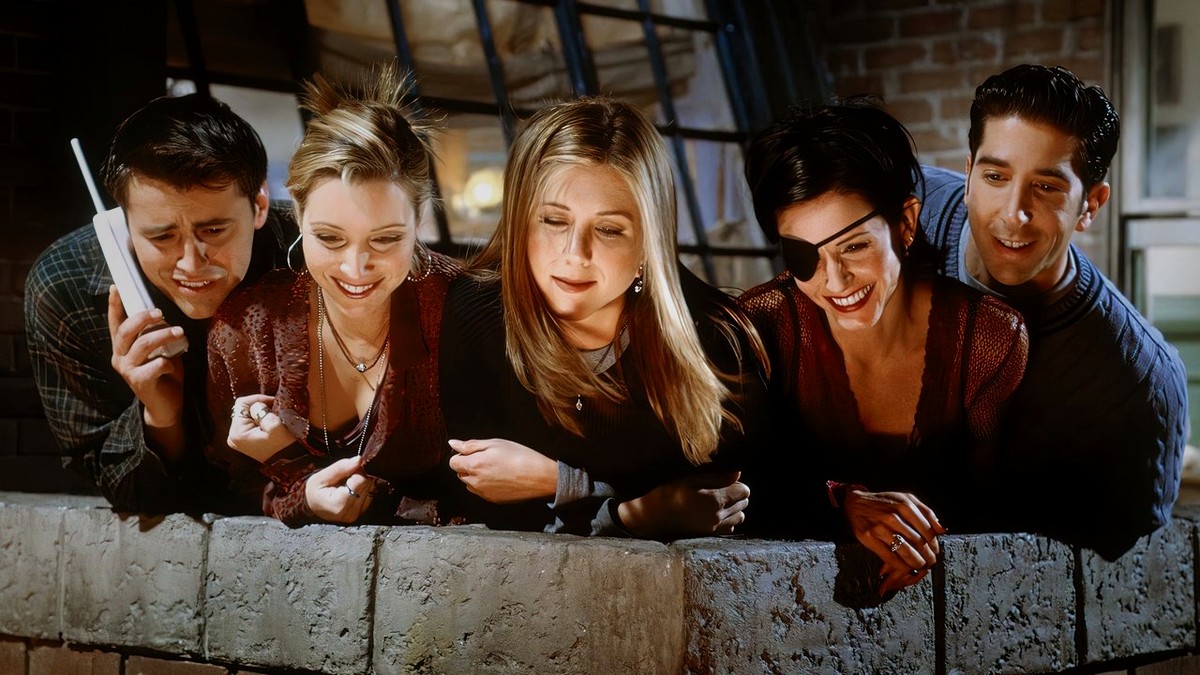
Before his death, the dominant takes on the show oscillated between earnest love and corrective backlash — the BuzzFeed-era "actually Friends is bad" pieces, the academic critiques about diversity, the inevitable New Yorker contrarian retrospective. These takes still exist. They've just gotten quieter, because for many viewers, Friends is now also a place where Matthew Perry is alive.
That doesn't fix the show's actual problems. It does mean rewatching it now feels less like a debate about pop culture and more like sitting in someone's apartment with the lights low. Perry's specific performance — the arrhythmic delivery, the deflection comedy, the moments where Chandler's vulnerability cracked through — has become harder to watch with detachment. The show became, retroactively, a record of his work.
There will not be a Friends reboot. Marta Kauffman has been clear. The cast has been clear. The decision was effectively final after Perry died, but it had been final long before.
So Does It Hold Up?
The technical Friends — the chemistry, the structure, the pacing, the willingness to do real emotional work — holds up, fully. The cultural Friends — the assumptions about who is funny, who is welcome, what kind of comedy is acceptable to make at someone's expense — does not.
A 2026 viewer who sits down with the show needs to come in knowing both. The pleasure of watching Phoebe sing "Smelly Cat" or Ross try to move a couch is real and intact. The discomfort of watching Chandler dread visiting his father is also real, and it's not the kind of discomfort that softens with explanation.
Most older shows ask viewers to do this kind of mixed accounting. Friends asks a little more of it than its peers, partly because the show was so dominant that everyone has stronger feelings about it, and partly because the very specific things it did badly are things that a 2026 audience reads more clearly than a 1996 one did.
The good news is that the parts that hold up are the parts that made it the show in the first place — the friendship, the comic rhythm, the willingness to pay off emotional storylines. Those are still there. The bad parts are bad. They're not erased by the good parts. Both can be true.
Where to Watch Friends Now
All ten seasons are streaming on Max (subscription). HBO paid a substantial sum to acquire the streaming rights from Netflix in 2020 and have kept them ever since. There is no current sign of Friends leaving Max for another platform. If you don't have Max, individual seasons can also be purchased on Amazon, Apple TV, and Fandango at Home.
Is Friends Really Worth Watching in 2026?
Yes — with eyes open. The show is funnier than people who didn't grow up with it expect, and the comedic chemistry between the six leads still lands as well as anything in the genre. It's also a 90s sitcom that reflects 90s assumptions about diversity, gender, and acceptable comedy. A first-time viewer in 2026 will find both things at once. That's true of almost any older sitcom, but it's especially true of Friends because the show was so central to defining what mainstream sitcoms looked like for a generation.
If Friends is the comfort sitcom of the 90s, Seinfeld is the show that argued comedies didn't have to be comforting at all. We took on that debate separately. The short version: both shows are foundational, both are flawed, and the question of which one mattered more is more interesting than the question of which one is funnier.