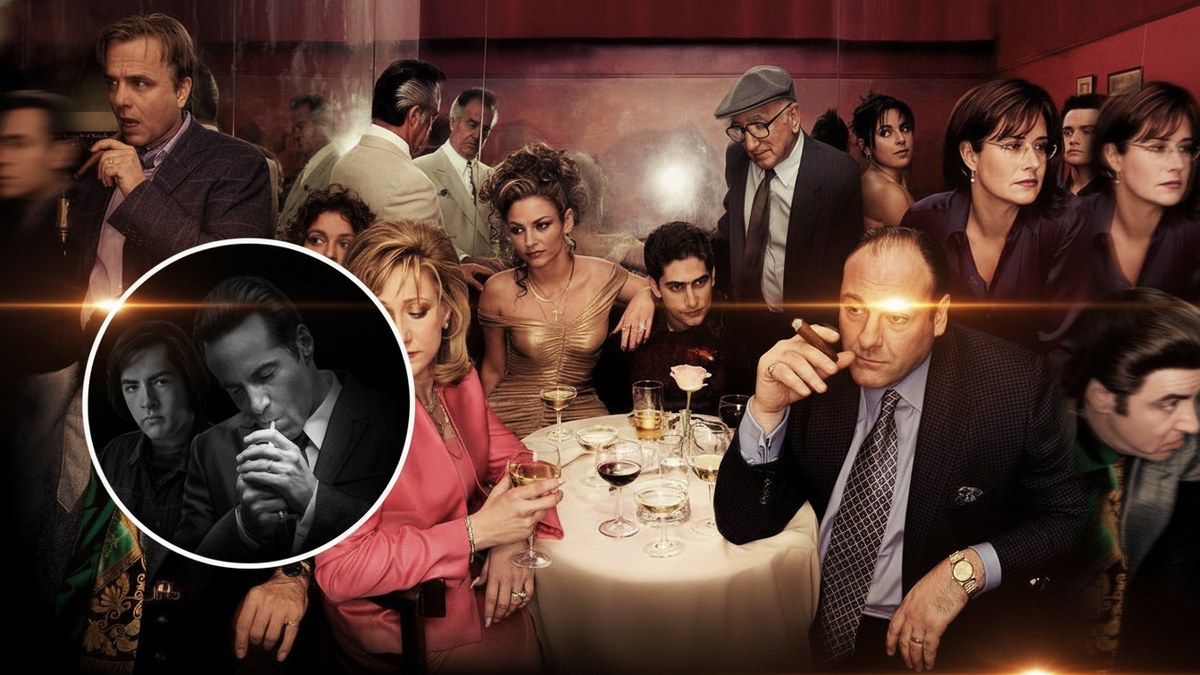
The Sopranos premiered on HBO on January 10, 1999. The pilot opened with a middle-aged man in a tank top, sitting in a waiting room, looking up at a statue of a half-naked woman. The man was Tony Soprano. The waiting room belonged to a therapist. The therapist was Dr. Jennifer Melfi. The first thing Tony would tell her — once they got past the small talk — was about the day a family of ducks had moved into his backyard pool and then left, and how upset that had made him.
Twenty-seven years later, this is still the single most consequential opening scene in the history of American television.
Almost every prestige drama that has come after The Sopranos has been in some form of conversation with that scene. Breaking Bad, Mad Men, The Wire, Succession, Better Call Saul, Severance, Industry — none of these shows look the way they look if The Sopranos hadn't first taught television what a one-hour adult drama could actually be. That's not nostalgia talking. That's the structural reality.
This is the case for what The Sopranos invented, why it still matters, and how to watch it in 2026 if you've never seen it.
What the Show Actually Invented
Before The Sopranos, dramatic television was a closed system. Episodes resolved in 47 minutes. Characters arrived at moral lessons. Antagonists were antagonists. Protagonists were sympathetic enough that the audience could comfortably root for them. The form was constructed to deliver entertainment without disturbance.
The Sopranos threw most of these conventions out and rebuilt the form around different rules. Five specifically.
The antihero protagonist as a study, not a redemption arc. Tony Soprano kills people. He has affairs. He launders money. He is, by any reasonable moral accounting, a bad man. The show never asks the audience to forgive him for these things. It also never asks the audience to dismiss him. David Chase's gambit was that an audience could sustain genuine investment in a protagonist whose moral failings were not going to be resolved, because the investment wasn't about morality — it was about understanding. Tony was interesting because he was complicated, not because he was good. Every antihero protagonist on television since (Walter White, Don Draper, Logan Roy, the Roy children, Tommy Shelby) is operating in territory The Sopranos mapped first.
The therapy session as structural device. Tony's sessions with Dr. Melfi were the show's secret weapon. Most series would have used a therapist character for one or two episodes — a crisis arc, then move on. Chase made the therapy ongoing across all six seasons, which gave the show a structural mechanism that didn't exist anywhere else on television: a place where the protagonist could verbalize what he was actually thinking, in his own voice, without the dramatic obligation to either lie or perform. The audience got direct access to Tony's interior life. The therapist functioned as an audience proxy without breaking the fictional frame. Almost no other show has figured out how to replicate this device — In Treatment tried, The Sopranos's own spinoff conversations couldn't manage it — because Chase had built the device into the show's DNA from the first scene.
The episode that's about nothing. The Sopranos was the first major dramatic series that consistently allowed itself to make episodes where the plot did not noticeably advance. Tony goes to the dentist. Christopher writes a screenplay. The family sits around. The show trusted that character was sufficient. Most television in 1999 didn't trust this. Plot was the engine; character was the lubricant. The Sopranos inverted that. Episodes like "Pine Barrens" (Season 3) and "College" (Season 1) and "Whitecaps" (Season 4 finale) became cultural touchstones partly because they were doing something the form hadn't allowed.
The dream sequence treated as plot-relevant. Television in 1999 used dream sequences for jokes, for budget-saving fill, or for cheap thematic underline. Chase used them as actual narrative information. Tony's dreams in seasons 5 and 6 ran for entire episodes. They were dense, surreal, sometimes literally interpreted by Dr. Melfi in the next session. They influenced the plot. They told you what Tony actually thought when his conscious mind couldn't. The patience to let a dream sequence run for 22 minutes of a 60-minute episode was a creative decision no network drama before The Sopranos could have justified. After it, every prestige drama has felt entitled to the same patience.
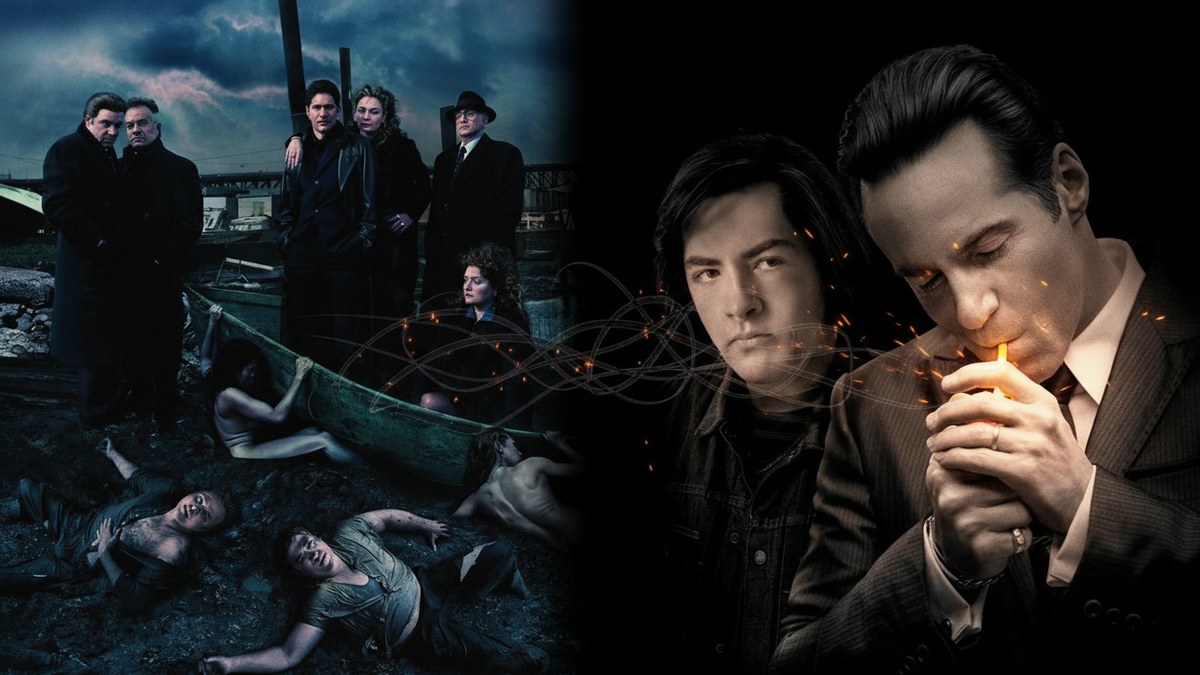
The willingness to leave things unresolved. This is the big one. The Sopranos did not pay off most of its setups. Subplots disappeared. Mysteries went unanswered. Tony's mother's plot against him was raised and then partially abandoned when Nancy Marchand died. The Russian in the Pine Barrens was never found. The Federal investigation that ran across seasons mostly fizzled. Each of these was a deliberate choice. Chase argued — correctly, in retrospect — that life itself doesn't deliver resolutions, and that a show committed to depicting how people actually live couldn't deliver them either. This was a revolutionary thesis for American television. Everything that came after The Sopranos has been working in the space this thesis opened up.
Gandolfini
James Gandolfini's performance as Tony Soprano is one of the four or five greatest performances ever given on television. The other candidates — Bryan Cranston as Walter White, Hugh Laurie as Gregory House, Edie Falco as Carmela (also from The Sopranos), Jon Hamm as Don Draper, Jeremy Strong as Kendall Roy — are all in some sense building on what Gandolfini did first.
The performance was built on a specific physical and tonal contradiction. Gandolfini was 6'1", over 250 pounds, with a face that defaulted to menace. Tony was a brutal man capable of brutal violence. And yet most of what Gandolfini actually did on screen was deeply quiet. Tony's eyes registered fear, sadness, exhaustion, confusion. The contrast between the body and the interior — the physical capacity for violence and the emotional inability to manage his own life — was the central engine of the show. Gandolfini understood this from the first scene and never let either register collapse the other.
He also did something almost no other actor of his stature did: he made acting look like work. Tony's silences were heavy. His monologues to Dr. Melfi were halting. He searched for words in scenes that other actors would have delivered fluently. Gandolfini knew that real people in therapy don't have rehearsed lines, and he played the searching as part of the performance. Twenty-seven years later, those scenes are still the most affecting therapy scenes in any fiction.
Gandolfini died June 19, 2013, of a heart attack in Rome. He was 51. The loss of him at that age has only deepened the cultural weight of his performance. The man who played Tony Soprano died young, alone in a hotel, having spent decades giving us a character built around the terror of dying suddenly. The symmetry has not gone unnoticed.
The Ending
The Sopranos ended on June 10, 2007 with the episode "Made in America." The final scene is famous to the point of meme.
Tony, Carmela, AJ, and Meadow are meeting at Holsten's, a New Jersey diner, for dinner. Tony arrives first. He puts a quarter in the jukebox and selects Journey's "Don't Stop Believin'." Carmela arrives. AJ arrives. Meadow is running late, parking outside, having trouble with the parallel park. The bell over the door rings every time someone enters. The camera keeps cutting to Tony's POV — every patron in the diner becomes a possible threat. Meadow finally gets the park right and runs across the street toward the diner. The bell rings. Tony looks up. The screen cuts to black.
Was Tony killed? Was the cut to black just a cut to black? David Chase has refused, for nearly two decades, to give a definitive answer. In one interview he appeared to confirm Tony was dead. In another he walked it back. In a 2021 documentary he suggested that the question itself was the point.
The 2026 critical consensus is that Tony was almost certainly killed in that final scene. The show had set up the structural rule earlier in the season — when Bobby Baccalieri suggested that you probably don't hear it when it happens — and the cut to black is the form executing that rule. The audience doesn't hear the gunshot because Tony didn't either.
But the more interesting reading is the one Chase has gestured at: the ambiguity is the point. The Sopranos refused to deliver a clean ending because life doesn't deliver clean endings. The show's last argument was that the audience had to live with not knowing — which was the show's argument the entire time.
Carmela
The other essential performance in The Sopranos is Edie Falco's. Carmela is the character most often underrated in retrospectives because she's the character whose moral position is most uncomfortable. She knows what Tony does. She lives on the money. She maintains the lie that she doesn't fully know, that she's not fully complicit, that she could leave if she wanted to. Falco plays this self-deception with extraordinary precision. Carmela's hypocrisy is the show's deepest cut — she is the one character who could most credibly walk away and who consistently chooses not to.
The Season 4 finale, "Whitecaps," is a 75-minute episode that is structurally a marriage drama with one of the most intense fights ever staged for television. Falco won an Emmy for the episode. The fight is largely two people in a room, escalating, then de-escalating, then re-escalating. It's the most theatrical Sopranos ever gets. It also might be the cleanest single hour of acting the show produced.
Influence
Every prestige drama since The Sopranos has been in some kind of conversation with it.
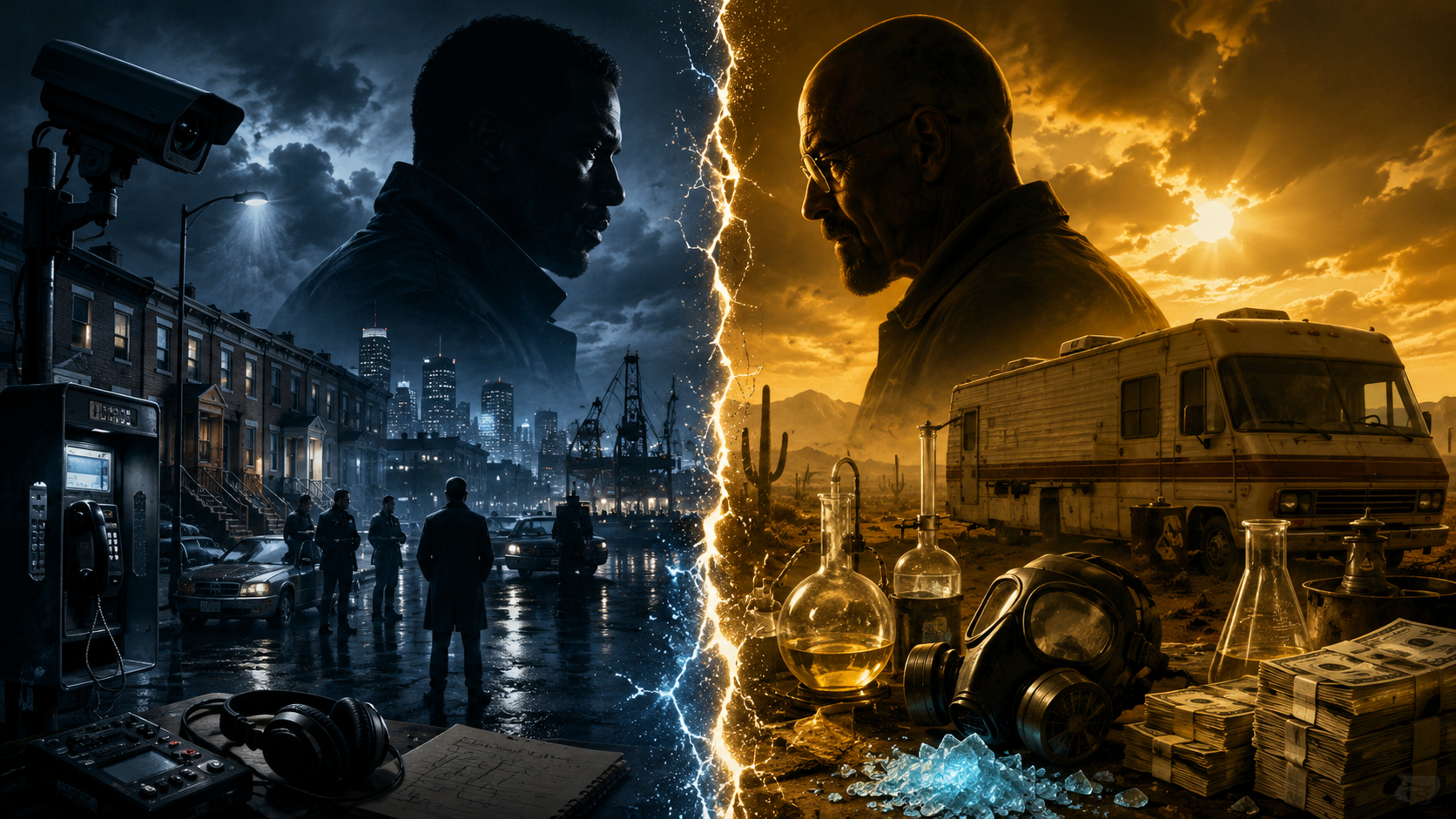
The Wire (2002) took the show's commitment to systems thinking and applied it to an entire American city. Six Feet Under (2001) took the family dynamics and applied them to grief. Mad Men (2007) took the antihero protagonist and applied him to advertising and 1960s American masculinity. Breaking Bad (2008) took the antihero protagonist and made him explicitly malignant. Succession (2018) took the dynastic anxiety and applied it to media empires. The Bear (2022) took the Sopranos's ambient New Jersey-Italian-American cultural register and applied it to a Chicago kitchen.
This isn't a derivative line. It's a foundational one. Television could have gone in other directions. The Sopranos established the direction it went in.
How to Watch It in 2026
If you've never seen The Sopranos, you're in for one of the great viewing experiences of any era. Some practical guidance.
Watch it in order. No skipping ahead. The show rewards patience and uses early episodes to build relationships that pay off later.
Don't binge it. The Sopranos was designed for weekly viewing. Episodes are dense. You'll get more out of them with a day or two between each. Aim for 2-3 episodes per week, not 5-10.
Stick with Season 2. Season 1 is great. Season 2 is widely considered the show's weakest. Many first-time viewers bounce off here. Don't. Season 3 is when the show finds its full power, and the Season 3-4-5 run is some of the best television ever made.
Watch the finale knowing the ending is debated. Don't read theories first. The "cut to black" works best when you don't know it's coming.
Where to Watch the Sopranos in 2026
All 86 episodes of The Sopranos are streaming on HBO Max in a 4K remastered transfer that's the definitive way to watch the show in 2026.
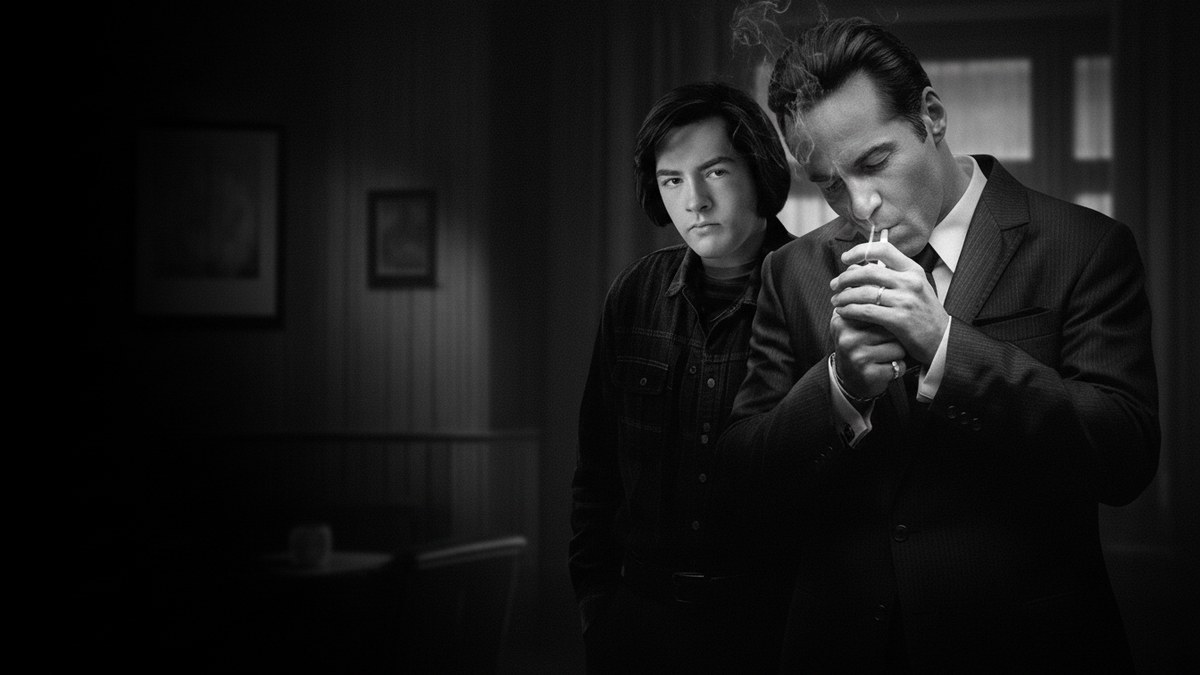
The prequel film The Many Saints of Newark (2021), starring Michael Gandolfini as young Tony, is also on HBO Max. It's a worthwhile companion piece — Michael Gandolfini doing a careful imitation of his late father is more affecting than I expected. The film itself is less essential than the show but worth seeing for completists.
What About the Spin-Offs and Continuations?
David Chase has remained protective of The Sopranos universe. The Many Saints of Newark was the only continuation he authorized. There is no current plan for additional spin-offs, sequels, or revivals. Chase has said in multiple interviews that the show ended where it ended, and that he's not interested in extending it.
The 2021 prequel film and the original 86-episode run is the complete official Sopranos canon. Watch both, in that order — the show first, then the prequel — and you have everything Chase has chosen to make.
Why Does the Sopranos Still Matter?
Because every prestige drama on television in 2026 is in some way its descendant. Because James Gandolfini's performance set a standard most actors will never reach. Because the show argued for things — patience, ambiguity, moral complexity, the willingness to let a story breathe — that have permanently reshaped what television can do. Because watching it for the first time in 2026 is still as cinematic an experience as television can deliver.
You don't have to call it the greatest TV show ever made. Plenty of viewers prefer The Wire or Mad Men or Breaking Bad. The point isn't the ranking. The point is that the conversation about which prestige drama is the greatest is a conversation The Sopranos made possible.
It started in a waiting room in 1999. Twenty-seven years later, it hasn't ended.
For more on the prestige TV era The Sopranos founded, see our Where to Stream Prestige TV guide. For the post-Sopranos debate over which crime drama is the best, see Wire vs Breaking Bad: Which Is Really the Greatest TV Show Ever Made?. For more on Edie Falco specifically, see our Industry Season 4 Review — the current HBO drama where Falco's structural descendants are working.